Who are the…
KINGS of the Bible times
also known as: sovereigns, emperors, pharaohs
Introduction
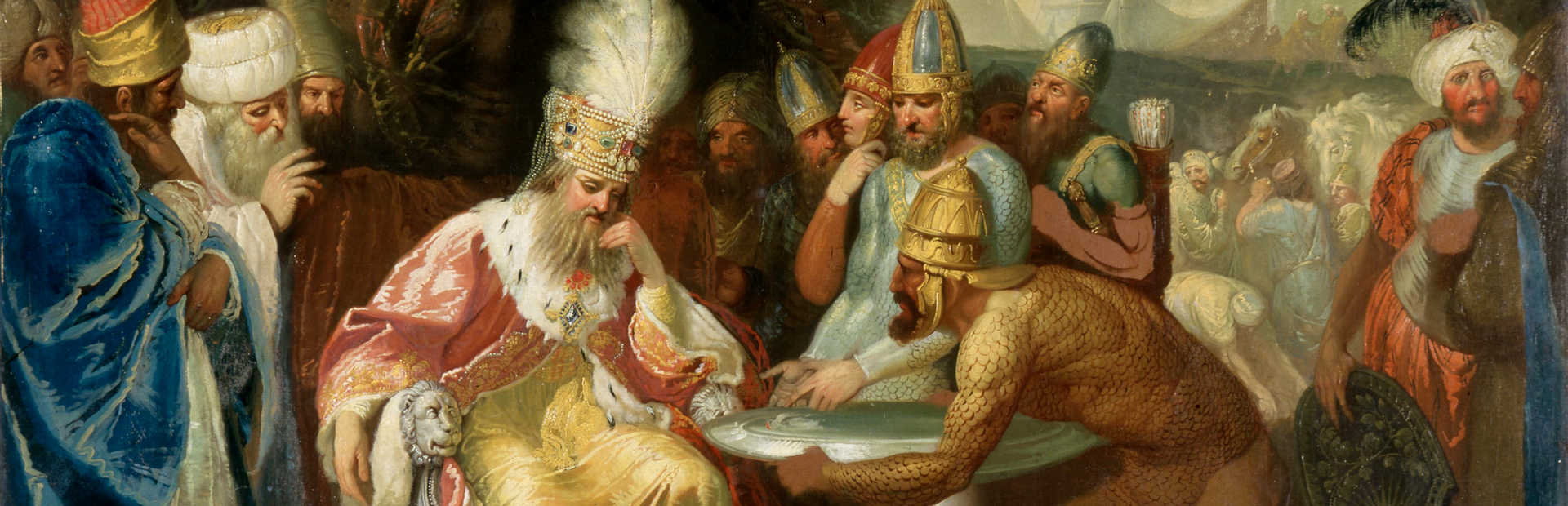
The word “king” is in Scripture very generally used to denote one invested with authority, whether extensive or limited. In the New Testament, the Roman emperor is spoken of as a king (1 Peter 2:13, 17), and Herod Antipas, who was only a tetrarch, is also called a king (Matthew 14:9; Mark 6:22).
ALSO SEE
 Answers about the pharaohs of the Bible
- tetrarch
- queen
- prince
- governor
- judge
- anoint
- crown
- diadem
- scepter
- branch (symbol of kings)
- Ahimelech (meaning brother of the king)
- burial
Sovereign God
Scripture applies the title of King to God as a whole and to Christ, the Son of God (Matthew 27:11).
I charge you…that you keep the commandment without stain or reproach until the appearing of our Lord Jesus Christ, which He will bring about at the proper time—He who is the blessed and only Sovereign, the King of kings and Lord of lords, who alone possesses immortality and dwells in unapproachable light, whom no man has seen or can see. To Him be honor and eternal dominion! Amen. —1 Timothy 6:13-16 NASB excerpt
He is a great King over all the Earth —Psalm 47:2 KJV
“I Am a Great King,” says the Lord of hosts —Malachi 1:14
…He who is the blessed and only Potentate, the King of kings and Lord of lords… —1 Timothy 6:15 NKJV
These will make war with the Lamb, and the Lamb will overcome them, for He is Lord of lords and King of kings… —Revelation 17:14 NKJV
…He has on His robe and on His thigh a name written:
KING OF KINGS AND LORD OF LORDS. —Revelation 19:16 NKJV
Everlasting King / King Eternal (Jeremiah 10:10; 1 Timothy 1:16-17)
SEE:
- What is the Sovereignty of God?
- GOD’S SOVEREIGNTY, election, and man’s free will—What does the Bible say? Answer
- Kingly office of Christ
- Prophecies about The Messiah—ultimate king of Israel
- Names of God
The people of God are also called “kings” (Dan. 7:22, 27; Matthew 19:28; Rev. 1:6, etc.). Death is called the “king of terrors” (Job 18:14 KJV).
There were 31 wicked kings subdued by Joshua in Canaan at God’s command (Joshua 12:9, 24).
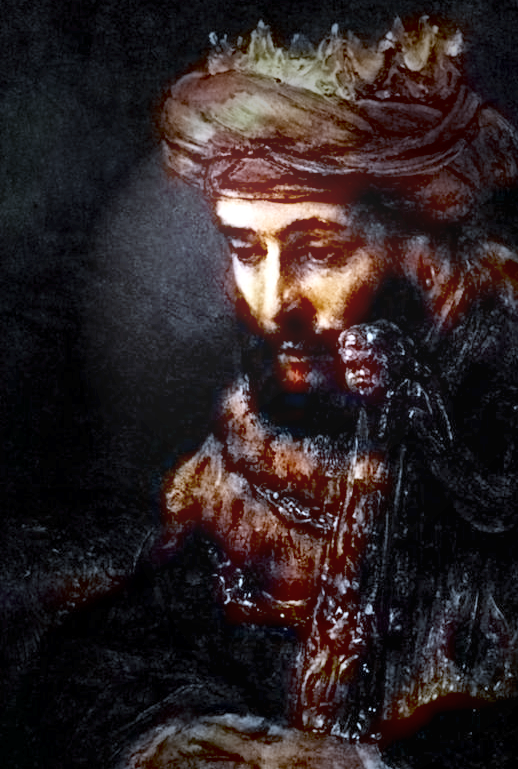
Also, in His Sovereignty, God can and has moved the hearts and minds of kings to fulfill His purposes.
Hebrew kings
Jehovah was the sole King of the Jewish nation (1 Samuel 8:7; Isaiah 33:22). But there came a time in the history of that people when a king was demanded, that they might be like other nations (1 Samuel 8:5). The prophet Samuel remonstrated with them, but the people cried out, “Nay, but we will have a king over us.” The misconduct of Samuel's sons was the immediate cause of this demand.
The Hebrew kings did not rule in their own right, nor in name of the people who had chosen them, but partly as servants and partly as representatives of Jehovah, the true King of Israel (1 Samuel 10:1).
The limits of the king's power were prescribed (1 Samuel 10:25).
Many of the records of these kings are recorded in The Book of Kings One and Two, and the Book of Chronicles One and Two. There also existed the chronicles of King David, but these have been lost.
The officers of a king’s court included:
- the recorder or remembrancer (2 Samuel 8:16; 1 Kings 4:3)
- the scribe (2 Samuel 8:17; 20:25
- the officer over the house, the chief steward (Isaiah 22:15
- the “king's friend,” a confidential companion (1 Kings 4:5)
- the keeper of the wardrobe (2 Kings 22:14)
- captain of the bodyguard (2 Samuel 20:23)
- officers over the king's treasures, etc. (1 Chronicles 27:25-31)
- commander-in-chief of the army (1 Chronicles 27:34)
- the royal counsellor (1 Chronicles 27:32; 2 Samuel 16:20-23).
- ambassador
More information
Chronological list of Hebrew kings
Kings of the 12 tribes of Israel, before they divided
A competitor king
King Ishbosheth (4th son of King Saul) (aka Eshbaal, Ish-bosheth, Ishbaal) ruled part of Israel for 2 years during a civil war against David. This is before the 12 tribes fully split after King Solomon.
The list of monarchs of the Kingdom of Israel therefor starts with Jeroboam I, the first king after the full division.
Kings of the Kingdom of Judah
- Rehoboam—Israel split during his reign and both Judah and Israel sank in increasing moral and spiritual decay
- Abijah
- Asa
- Jehoshaphat
- Jehoram
- Ahaziah
- Athaliah, a queen
- Joash (Jehoash)
- Amaziah
- Uzziah (Azariah)
- Jotham
- Ahaz—wicked
- Hezekiah
- Manasseh
- Amon
- Josiah
- Jehoahaz
- Jehoiakim
- Jehoiachin (Jechonias, Jeconiah)
- Zedekiah
Kings of the Kingdom of Israel
- Jeroboam I—wicked
- Nadab—assassinated
- Baasha—wicked
- Elah—wicked (son of Baasha)
- Zimri—wicked
- Tibni—ruled only part of the kingdom during a 4-year civil war against Omri (1 Kings 16:21, 22); Omri prevailed, and Tibni died
- Omri—wicked
- Ahab—wicked
- Ahaziah—wicked
- Jehoram (Joram)—wicked
- Jehu
- Jehoahaz—wicked
- Jehoash (Joash)
- Jeroboam II
- Zechariah
- Shallum
- Menahem—wicked
- Pekahiah—wicked, assassinated
- Pekah—wicked
- Hoshea—wicked
List of Davidic kings (The House of David)
- King David — son of Jesse
- King Solomon — son of David and Bathsheba
- King Rehoboam — son of Solomon and Naamah
- King Abijaham (Abijah) — son of Rehoboam and Micaiah (Maacah)
- King Asa — son of Abijam
- Jehoshaphat — son of Asa and Azubah
- King Jehoram — son of Jehoshaphat
- King Ahaziah — son of Jehoram and Athaliah, daughter of evil Queen Jezebel and King Ahab
- Queen Mother Athaliah — daughter of evil Queen Jezebel and King Ahab
- King Jehoash (Joash) — son of Ahaziah and Zibiah of Beersheba; grandson of Queen Mother Athaliah
- King Amaziah — son of Jehoash and Jehoaddan of Jerusalem
- King Uzziah — son of Amaziah and Jecoliah of Jerusalem
- Jotham (regent) — son of Uzziah and Jerusha (Jerushah) daughter of Zadok
- King Ahaz — son of Jotham
- King Hezekiah — son of Ahaz and Abijah daughter of Zechariah
- King Manasseh — son of Hezekiah and Hephzibah
- King Amon — son of Manasseh and Meshullemeth
- King Josiah — son of Amon and Jedidiah
- King Jehoahaz — son of Josiah and Hamutal
- King Jehoiakim (Eliakim) — son of Josiah and Zebidah
- King Jehoiachin (Coniah; Jechoniah) — son of Jehoiakim and Nehusta
- King Zedekiah — son of Josiah and his consort Hamutal (Hamital)
- Jesus Christ, King of kings
113 Kings of biblical times
- Abijam
- Abimelech
- Adonibezek—wicked / subdued 70 others (Judges 1:7)
- Achbor
- Achish
- Adoni-zedec
- Adonizedek
- Agag
- Agrippa I
- Ahab
- Ahasuerus
- Ahaz
- Ahaziah
- Ahmose I (aka Aahmes I, or Amosis) (founder of the 18th Dynasty of Egypt in the New Kingdom, mid-16th century BC)
- Alexander the Great
- Amaziah
- Amon
- Amraphel
- Apopi (Apopis)
- Apries
- Aretas
- Arioch
- Artaxerxes
- Asa
- Asnapper
- Augustus
- Baal-hanan
- Baalis
- Baasha
- Bela
- Belshazzar
- Ben-hadad
- Berodach-baladan
- Birsha
- Chedorlaomer
- Chushan-rishathaim
- Cyrus
- Debir
- Eglon
- Elah
- Eliakim
- Eth-baal
- Evil-Merodach
- Darius, the Mede
- David
- Ishbosheth, 4th son of King Saul (aka Eshbaal, Ish-bosheth, Ishbaal)
- Hadad
- Hadadezer
- Hadar (Gen. 36:38)
- Hadarezer
- Hanun
- Herod Agrippa I
- Herod the Great
- Hezekiah
- Hiram
- Hoham
- Hophra
- Hoshea
- Hur
- Husham (Gen. 36:34-35; 1 Chr. 1:45-46)
- Jabin
- Japhia
- Jechoniah (Jechonias)
- Jehoash
- Jehoiachin
- Jehoiakim
- Jehoram
- Jehu
- Jeroboam—wicked
- Joash
- Jobab
- Josiah
- Lemuel
- Melchizedek
- Menahem
- Merodach-Baladan
- Mesha
- Nadab
- Nabonidus, father of Belshazzar
- Nahash
- Nebuchadnezzar
- Necho II (Neco II)

Nero, the emperor that probably martyred Paul- Nimrod
- Og
- Omri
- Oshea
- Osnapper
- Piram
- Pul
- Rameses II
- Rehoboam
- Rezin
- Rezon
- Samlah of Masrekah (Genesis 36:36-37; 1 Chronicles 1:47-48)

Sargon- Saul of Edom
- Saul, 1st king of Israel
- Sennacherib
- Shallum
- Shalman
- Shemeber
- Shinab
- Shishak I
- Sihon
- Smerdis
- So
- Solomon
- Talmai
- Tiglath-Pileser III
- Tirhakah
- Toi
- Uzziah
- Xerxes
- Zachariah
- Zedekiah
- Zerah
Kingdoms of biblical times
- Alashiya
- Akkad
- Amorites
- Armenia
- Assyria
- Athens
- Bashan
- Canaanites
- Chaldea
- Babylon
- Canaan
- Crete
- Cyprus
- Darkness, Kingdom of
- Edom
- Egypt
- Elam
- Ethiopia
- Girgashites
- Greece
- Hittites
- Hivites
- Israel, Kingdom of
- Jebusites
- Judah, Kingdom of
- Kerma
- Lebanon
- Lydia
- Macedonia
- Media
- Messenia
- Minoa — not mentioned in the Bible, but Crete is and is referred to as Caphtor, and its people as Caphtorim (e.g., Genesis 10:14, Jeremiah 47:4, Amos 9:7). They are linked to the Philistines’ origins.
- Mycenaea
- Nubia
- Parthia
 Persia (Iran)—What is its significance in the Bible?
- Philistia
- Punt
- Rome
- Sidon
- Sumeria (Sumer)
- Syria
More Information
- Answers about the pharaohs of the Bible
- Caesars
- Princes in the Bible
- Queens in the Bible
- THE KINGDOM OF GOD—What, when and where is it?
- What is the Millennium Kingdom?