What is the…
Kingdom of Babylon
also known as: Babylonia and “the land of the Chaldeans”
This kingdom was called “the land of the Chaldeans” (Jeremiah 24:5; Ezek, 12:13) and was an extensive province in Central Asia along the valley of the Tigris from the Persian Gulf northward for some 300 miles.
It was famed for its fertility and its riches. Its capital was the city of Babylon, a great commercial center (Ezek. 17:4; Isaiah 43:14).
The salt-marshes at the mouths of the Euphrates and Tigris were called Marratu, “the bitter” or “salt”, the Merathaim of Jeremiah 50:21. They were the original home of the Kalda, or Chaldeans.
Districts
Babylonia was divided into the two districts of Accad in the north, and Summer (Sumer) (probably the Shinar of the Old Testament) in the south.
Cities
Among the Kingdom of Babylon’s cities were…
 Babylon (Babel)
- Cuthah (Kutha, Cuth, Cuthah, Gudua, Tell Ibrahim)
-
Ur (later called Mugheir or Mugayyar), on the western bank of the Euphrates
- Uruk, or Erech (Genesis 10:10) (later called Warka), between Ur and Babylon
- Larsa (later called Senkereh), the Ellasar of Genesis 14:1, a little to the east of Erech
- Nipur (later called Niffer), southeast of Babylon
- Sepharvaim (Sephar-vaim) (2 Kings 17:24), “the two Sipparas” (now Abu-Habba), considerably to the north of Babylon
- Eridu, “the good city” (later called Abu-Shahrein), which originally lay on the shore of the Persian Gulf, but is now, owing to the silting up of the sand, about 100 miles distant from it.
- Kulunu, or Calneh (Genesis 10:10).
Kings
TIGLATH-PILESER III—In 729 BC, Babylonia was conquered by the Assyrian king Tiglath-pileser III
SHALMANESER IV—on the death of Shalmaneser IV, it was seized by the Kalda or “Chaldean” prince Merodach-baladan (2 Kings 20:12-19)
MERODACH-BALADAN (aka Berodach-baladan)—held monarchy until 709 BC. He was driven out by Sargon. He was the son of Baladan.
SARGON and NARAM-SIN—The most famous of the early kings of Babylonia were Sargon of Accad (3800 BC) and his son, Naram-Sin, who conquered a large part of Western Asia, establishing their power in Canaan, and even carrying their arms to the Sinai peninsula.
A great Babylonian library was founded in the reign of Sargon.
ELAM and KHAMMU-RABI (AMRAPHEL)—Babylonia was subsequently again broken up into more than one state, and at one time fell under the domination of Elam. This was put an end to by Khammu-rabi (Amraphel), who drove the Elamites out of the country, and overcame Arioch, the son of an Elamite prince. From this time forward Babylonia was a united monarchy.
In the time of Khammu-rabi, Syria and Canaan were subject to Babylonia and its Elamite suzerain; and after the overthrow of the Elamite supremacy, the Babylonian kings continued to exercise their influence and power in what was called “the land of the Amorites.”
KASSITE DYNASTY—About 1750 BC it was conquered by the Kassi, or Kosseans, from the mountains of Elam, and a Kassite dynasty ruled over it for 576 years and 9 months.
In the epoch of the Kassite dynasty, Canaan passed into the hands of Egypt.
SENNACHERIB—Under Sennacherib, Babylonia revolted from Assyria several times, with the help of the Elamites, and after one of these revolts Babylon was destroyed by Sennacherib, 689 BC.
ESARHADDON—Babylon was rebuilt by Esarhaddon, who made it his residence during part of the year, and it was to Babylon that Manasseh was brought a prisoner (2 Chronicles 33:11). After the death of Esarhaddon, Saul-sumyukin, the governor of Babylonia, revolted against his brother the Assyrian king, and the revolt was suppressed with difficulty.
-
NABOPOLASSAR—When Nineveh was destroyed, 606 BC, Nabopolassar, the governor of Babylonia, who seems to have been of Chaldean descent, made himself independent. His son Nebuchadrezzar (Nabu-kudur-uzur), after defeating the Egyptians at Carchemish, succeeded him as king, 604 BC, and founded the Babylonian empire.
NEBUCHADREZZAR (Nabu-kudur-uzur)—He strongly fortified Babylon, and adorned it with palaces and other buildings.
EVIL-MERODACH—Nebuchadrezzar’s son, Evil-merodach, who succeeded him in 561 BC, was murdered after a reign of two years.
NABONIDUS (Nabu-nahid)—The last monarch of the Babylonian empire was Nabonidus (Nabu-nahid), 555-538 BC, whose eldest son, Belshazzar (Bilu-sar-uzur), is mentioned in several inscriptions. Babylon was captured by Cyrus, 538 BC, and though it revolted more than once in later years, it never succeeded in maintaining its independence.
- BELSHAZZAR
 Who is Sargon?
Rivers
- Ahava
- Chalonas
- Euphrates
- Tigris
- Ulai
- rivers of Babylon
False gods
- Bel
- Dagon
- Meni (idol)
- Merodach
- Meshach
- Nergal
- Succoth-benoth
- About idolatry and false gods in the Bible
- About idols in the Bible
More Information
- What is the city of Babylon (Babel)? and what is its significance?
 What is the significance of Iraq in the Bible?
- What is the Tower of Babel? and what is it important?
- Tower of Babel—Is there archaeological evidence of it?
- What is the confusion of languages at Babel?
- Confusion of Languages—Is there any reference in early Mesopotamian literature to what happened at the Tower of Babel?
- Origin of Ethnic People Groups—Where did they all come from?
- Babylonish garment
- What are the Rivers of Babylon in the Bible
- Archaeology and the Bible
- Accad
- Adam
- Ahasuerus
- Amraphel
- Asnapper
- Assyria (enemy and sometimes part of Babylonia)
- Baladan
- Baruch
- battle-axe
- Besom
- Beth-haccerem
- bittern
- Boaz
- bondage
- branch
 Answers about bricks in the Bible
- Calneh
- Canaan, the language of
- candlestick
- captain
- What is The Captivity?
 What is Carchemish?
- What is Chaldea?
- Chaldees
- Chedorlaomer
- Chisleu
- What are the Books of Chronicles?
- mount of the congregation
- Cyrus (conquered Babylon)
- Who is Daniel?
- What is the Book Of Daniel?
- Who is Darius?
- Have archaeologists confirmed the existence of Darius the Great? Has his tomb been found?
- den
- dial
- dispersion
- doleful creatures
- dove (placed on the standards of the Babylonians)
- dulcimer
- Dura
- What is Eden in the Bible?
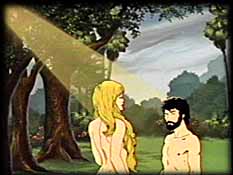 Has the Garden of Eden ever been found? Many Christians naively assume that the Garden of Eden was located near the modern Tigris and Euphrates rivers.
- The 4 pre-Flood rivers produced by the underground water source of the land of Eden: Pison (Pishon), Gihon, Hiddekel, and Perath (Euphrates) River—See: Genesis 2:10-14.
- Elasah
- exile
- feller
- furnace
- Gemariah
- Answers about gold in the Bible
- governor
- Who is Ham and what is his importance?
- hammer (Hebrew: pattish)
- Hebrew language (in relation to Babylon)
- Who is Hezekiah?
- hour
- Iddo
 Answers about idolatry and false gods in the Bible and history
- Answers about idols in the Bible
- What is the Book of Isaiah?
- What is The Kingdom of Israel?
- Jehoiachin, King (carried captive to Babylon by Nebuchadnezzar)
- Jechonias
- Jedaiah
- King Jehoiakim (carried captive to Babylon)
- Jehozadak (son of the high priest / carried into captivity by Nebuchadnezzar)
- Who is Jeremiah?
- What is Jerusalem, and why is it highly significant in world history and future events?
- Koa (place in the Babylonian empire)
- liver (the king of Babylon “looked upon the liver”)
- Lucifer (title given to a king of Babylon)
- Madmen (city threatened by Babylon)
- Manasseh, tribe of (Esarhaddon took them captive)
- mantle
- Media (monarch entered alliance with the Babylonian king)
- melzar (title of an officer at the Babylonian court)
- mene
- Merathaim (probably a symbolical name given to Babylon)
- Merodach-baladan
- Meshach (a title)
- About the miracles of the Bible, with comprehensive list
- Mishael (Hebrew youth trained in Babylon)
- mount of the congregation (mythic mountain of the Babylonians)
- Nebushasban (chief chamberlain of Babylon court)
- Nergal-sharezer (two Babylonian princes)
- Who is Nimrod? Was he godly or evil?
- What is Nineveh and why is it important?
- What and who are patriarchs in the Bible?
- Pekod (probably a place in Babylonia)
 Persia (Iran)—What is its significance in the Bible?
- Peter (worked in Babylon)
- Pison
- pool
- Answers about prophecy and the Bible
- Samaritans (brought from Babylon, etc.)
- Samgar-nebo (title of prince)
- sapphires (brought from Babylon)
- Seraiah (chief priest executed in Babylon)
- Shadrac (Hebrew youth trained in Babylon)
- sheriffs
- Sheshach (supposed to be equivalent to Babel/Babylon)
- Shinar, the land of
- Shoa
- synagogue (during Captivity)
 Answers about Ancient Syria and its Biblical significance
- Telassar
- Tel-haresha
- Tel-melah
- What is Solomon’s Temple?
- Temple, The Second (pillaged and destroyed by Babylon’s King Nebuchadnezzar)
- thyine wood
- tongues, confusion of
 What and who is Ur in the Bible?
- Answers about war in the Bible
- What is the Biblical perspective on war?
- Answers about the ancient Israelite army
- About wilderness in the Bible
- What are the wisemen (Magi) mentioned in the Bible?
- Zedekiah, King (rebelled against Babylon)
- Who is Zerubbabel? and what is his significance?