What is…
Memphis
also known as: Noph, Inbu-Hedj (the white walls), Men-nefer (enduring and beautiful), Menfe, Aneb-Hetch, Ankh-Tawy (Life of the Two Lands), Djed-Sut, Hut-ka-Ptah
Hebrew name: נֹ֑ף —transliteration: Noph
This ancient Egyptian city is mentioned by the prophet Hosea in Hosea 9:6, and mentioned under its name Noph in the King James version of Isaiah 19:13; Jeremiah 2:16; 46:14, 19; Ezek. 30:13, 16.
“…The princes of Memphis are deluded;
Those who are the cornerstone of her tribes
Have led Egypt astray.” —Isaiah 19:13b NASB
“Is Israel a slave? Or is he a homeborn servant?
Why has he become a prey?
…they have made his land a waste;
His cities have been destroyed, without inhabitant.
Also the men of Memphis and Tahpanhes
Have shaved [or grazed] the crown of your head.
Have you not done this to yourself
By your forsaking the Lord your God
When He led you in the way?” —Jeremiah 2:14-17 NASB
Memphis is said to have been founded by Menes, the first king of Egypt, and to have been about 19 miles in circumference. It was the capital of northern Egypt (called Lower Egypt). It was the seat of power for the kings of more than 8 dynasties and located at the crossroads of trade routes. It was mentioned by many ancient foreign sources, including Assyria and the Amarna letters.
A 13th century Arab writer and traveler reported,
The ruins of Memphis hold a half-day’s journey in every direction. —Abd al-Latif al-Baghdadi per Joanne and Isambert, Itinéraire descriptif, historique et archéologique de l'Orient, p. 1009
Memphis was an idolatrous city, the site of many heathen temples and practices. Because of the many evils committed by Memphis, God cursed it, bringing Divine judgment on the city and its people. Is was destroyed and eventually abandoned.
Thus says the Lord God,
“I will also destroy the idols And make the images cease from Memphis [Noph].
And there will no longer be a prince in the land of Egypt;
And I will put fear in the land of Egypt.I will make Pathros desolate,
Set a fire in Zoan
And execute judgments on Thebes [No].I will pour out My wrath on Sin [aka Pelusium],
The stronghold of Egypt;
I will also cut off the hordes of Thebes [aka No].I will set a fire in Egypt;
Sin will writhe in anguish,
Thebes will be breached
And Memphis [Noph] will have distresses daily.” —Ezekiel 30:13-16 NASB
From remains found half-buried in the sand, the site of this ancient city were discovered about 12 miles (20 km) south of Cairo, on the west bank of the Nile River. The modern cities and towns of Mit Rahina, Dahshur, Abusir, Abu Gorab, and Zawyet el'Aryan, all lie within the administrative borders of ancient Memphis. “The city was also the place that marked the boundary between Upper Egypt and Lower Egypt.”
Samuel Manning described the site as it appeared in the 1800s:
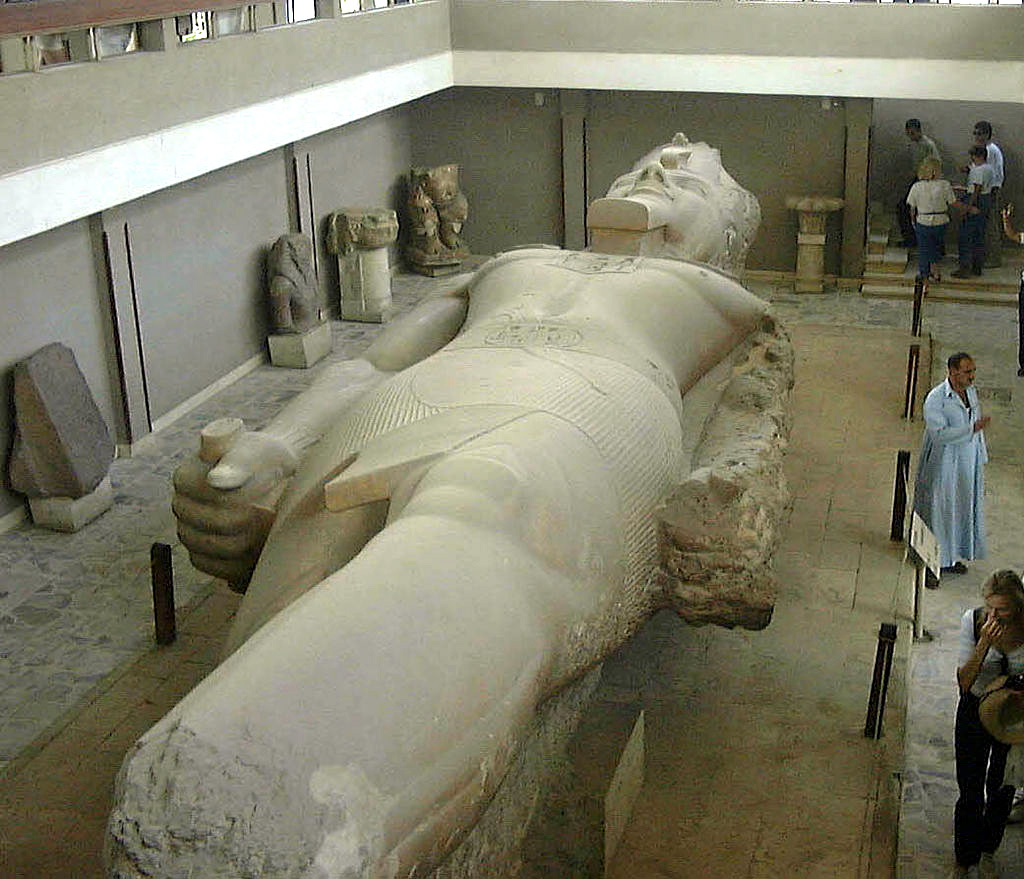
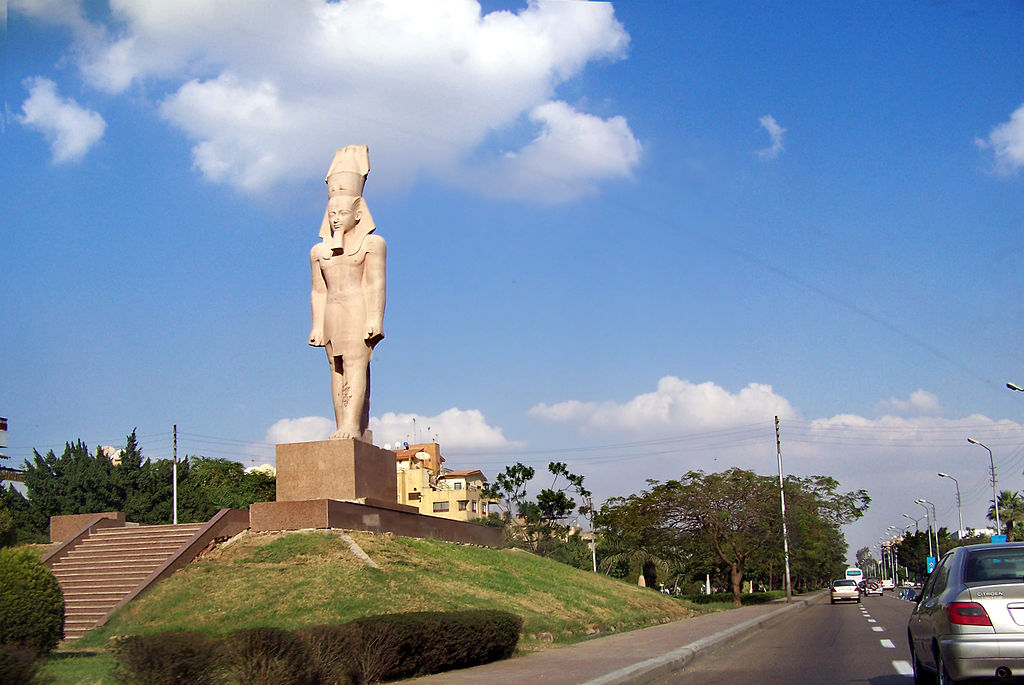
“There are few remains above ground of the splendor of ancient Memphis. The city has utterly disappeared. If any traces yet exist, they are buried beneath the vast mounds of crumbling bricks and broken pottery which meet the eye in every direction.
Near the village of Mitraheny [Mit Rahinah] is a colossal statue of Rameses the Great. It is apparently one of the two described by Herodotus and Diodorus as standing in front of the Great Temple of the false god Ptah. They were originally 50 feet tall. The one which remains, though mutilated, measures 48 feet. It is finely carved in limestone, which takes a high polish, and is evidently a portrait. It lies in a pit, which, during the annual floods, is filled with water.
As we gaze on this fallen and battered statue of the mighty conqueror who was probably contemporaneous with Moses, it is impossible not to remember the words of the prophet Isaiah, Isa. 19:13; 44:16-19, and Jeremiah, Jer. 46:19.” —Samuel Manning, The Land of the Pharaohs, 1875

Q & A
- What is Noph?
- What is Rameses?
- Who is Ptah?
 Answers about Ancient Egypt in the Bible
- About idolatry and false gods in the Bible
- About idols in the Bible
- What is the Book of Hosea?
- What is the Book of Isaiah?
- What is the Book of Jeremiah?
 What are the Cities of the Bible? Names, descriptions, locations and types