When did the U.S. government pass a law dictating the separation of church and state? Where can this law be found?

As the concept is commonly understood today, the government has never passed a law implementing the “separation of church and state.” The First Amendment simply states:
“Congress shall make no law respecting an establishment of religion, or prohibiting the free exercise thereof.”
Over the years, however, the Supreme Court and lower federal courts have reinterpreted this amendment in many ways. This reinterpretation of the Constitution has in effect become the “law” supposedly dictating the "separation of church and state."

Let's look first at a very brief history of the Courts reasoning and rationale for reinterpretation, and then we'll discuss what the phrase "separation of church and state" means as it is applied in American public policy.
One of the Supreme Court's most blatant violations of the Constitution came about through their reinterpretation of the Bill of Rights - the first ten amendments. Prior to this constitutional violation, the Bill of Rights applied only to the federal government. Notice the actual language of the First Amendment: "Congress shall make no law…"
As one of many efforts to limit the power of the federal government, the Constitution left authority over religious matters to the States. The Supreme Court consistently adhered to this constitutional principle until well into the twentieth century.
But in the 1925 ruling, Gitlow v. New York, the Supreme Court began ignoring its predecessors and precedents. The Court reasoned that one of the purposes of the Fourteenth Amendment was to extend the Bill of Rights to the States. (This would obviously expand the powers of the federal courts to a great degree.) The history of the Fourteenth Amendment does not support their contention, nor do the earlier Courts.
Nonetheless, the 1925 Court ignored the historical record and the opinions of their predecessors, establishing a new precedent. Gitlow dealt with freedom of speech and the press; religious matters would soon follow.
In the context of religion, the Court's first and most abusive reinterpretation began in a 1940 Supreme Court ruling, Cantwell v. Connecticut. Here, the Court applied the "free exercise" clause of the First Amendment to the states. Again, religion was a State matter. State courts were, and are, completely capable of handling the issue. Nevertheless, the Supreme Court, in direct opposition to the original intentions of the Constitution, applied yet another portion of the Bill of Rights to the States. They did not stop there.
The next landmark ruling came down in 1947. In the case, Everson v. Board of Education, the Supreme Court applied the "establishment clause" of the First Amendment to the states. In the context of the "separation of church and state," the Court's foundational reinterpretation of the Constitution was complete. From 1947 forward, the Court has ruled with regularity on religious issues, in direct violation of the original meaning of the First Amendment. Their rulings, and those of lower courts (federal and State) have become the “law” of "separation of church and state."
That was a very brief description of how the federal courts have taken authority over religious issues, reinterpreting the First Amendment and applying it to the States by way of the Fourteenth Amendment. All of this was done in clear violation of the actual wording of the Constitution, as well as the intentions of its framers. The modern concept of "separation of church and state" can not be justified using the historical record.
We are forced, however, to work with the existing court doctrines. Therefore, what does the phrase mean today as it is applied in American public policy? The First Amendment, which prohibited any "law respecting the establishment of religion or prohibiting the free exercise thereof," has evolved into something entirely new. During the last generation, the courts, at all levels, have ruled in ways that essentially guarantee the freedom from religion, instead of the freedom of religion.
 “Separation of church and state,” as applied to education, means that a prayer at a graduation ceremony is unconstitutional. It also means that students may not pause for a moment of silence at the beginning of their school day. It means that a nativity scene may not be displayed on public property unless there are other displays (e.g. Santa Clause or Christmas trees) that secularize the presentation.
Today's conception of "separation of church and state" has also been used to remove historic crosses from public property, and religious symbols from city seals. It has been used to remove the Ten Commandments from courtrooms, even though they are carved in stone within the architecture of the Supreme Court building. The concept has been used to prevent religious expressions on personalized license plates. And these are but a few of the official applications of the concept, or “law” of "separation of church and state."
One should understand that "separation of church and state" is not actually a law. It is a doctrine, or a legal concept, that has been implemented by the various courts primarily over the last fifty years. If this concept, as originally understood, would have been applied with consistency over the years, America would certainly be a different country right now. Religious expression would flourish, and the courts would not be micromanaging the religious life of the American people.
The doctrine of "separation of church and state" has been used, and is being used, to effectively purge religion from the public square. The historical perspective on church/state issues reveals a much different story. The government was to accommodate the religious communities; religion and religious expression were to be encouraged.
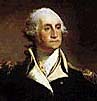
This is why, for example, the first Congress asked President George Washington to issue a Thanksgiving Proclamation upon completion of the Bill of Rights. Today, that practice would be viewed as unconstitutional. It would violate the "separation of church and state."
Recommended for further reading
- What is the legal and moral role of the Bible and Christianity in the U.S.A.? Should God be separated from American government? Answer
- How important is it to be "Politically Correct?" Answer
- What is legally permissible for students in America's public schools? Answer
- Is the religion of Secular Humanism being taught in public school classrooms? Answer
- Where should Christians draw the line in trying to make the U.S. a Christian nation? Answer
- Should Christians seek political power, or should we only focus on evangelism? Answer
- David W. Barton, Original Intent: The Courts, The Constitution, and Religion (Wallbuilder Press, 1996).
Author: Bill Suggs of WallBuilders. Photos provided for this article by Films for Christ.
Copyright © 1997, WallBuilders, Inc., All Rights Reserved—except as noted on attached “Usage and Copyright” page that grants ChristianAnswers.Net users generous rights for putting this page to work in their homes, personal witnessing, churches and schools.
