Star Wars: The Phantom Menace
 for sci-fi action/violence.
Reviewed by: Kyle Suggs
CONTRIBUTOR
| Moral Rating: | Average |
| Moviemaking Quality: |
|
| Primary Audience: | 7 to Adult |
| Genre: | Sci-Fi Action Adventure Fantasy |
| Length: | 2 hr. 16 min. |
| Year of Release: | 1999 |
| USA Release: |
May 19, 1999 (wide) December 3, 1999 (re-release) February 10, 2012 (3-D version release) (wide—2,600+ theaters) |


death of a friend
messiah / chosen one
Christ allegory
divine conception—the real one
good versus evil

honor
heroic warriors
courage, bravery
apprentices / mentor protégé relationships
 About swords in the Bible
life debt
| Featuring |
|---|
|
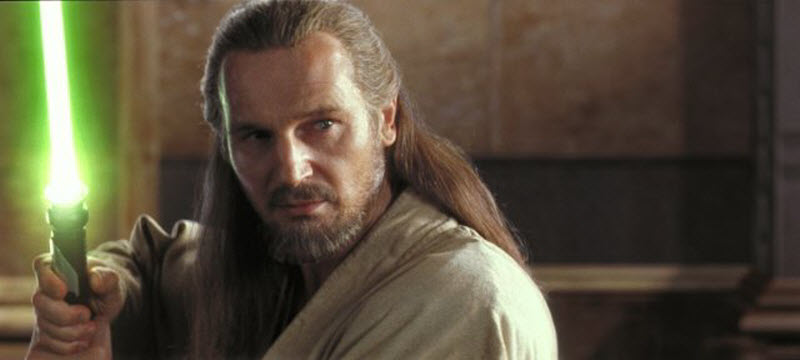
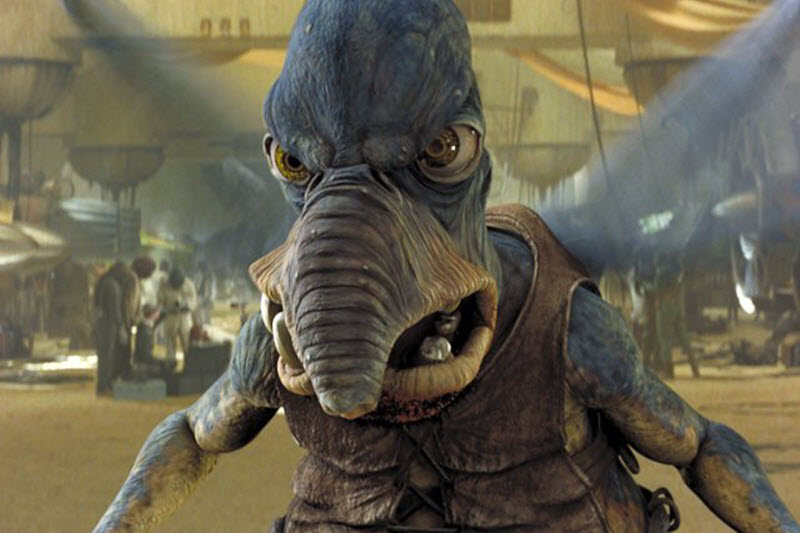
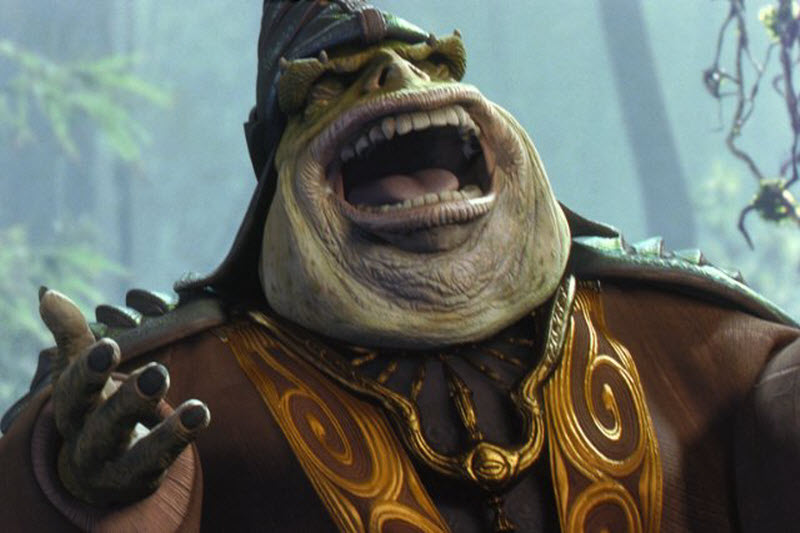
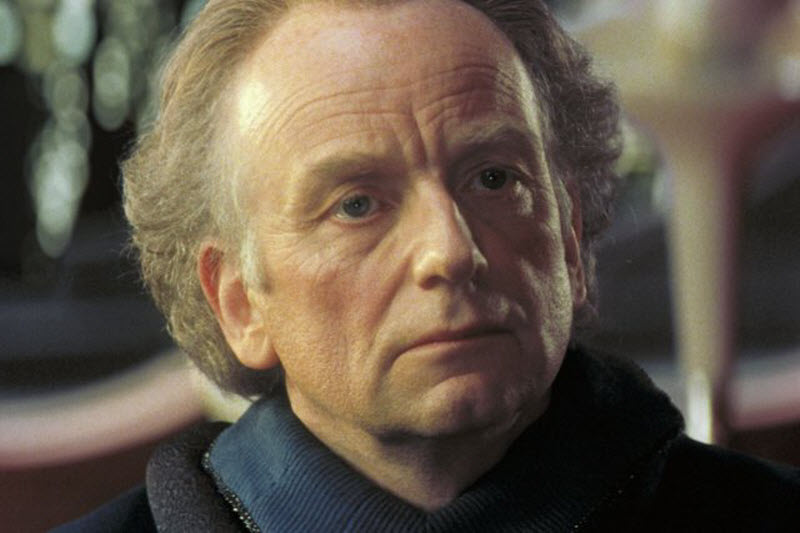
Liam Neeson … Qui-Gon Jinn Ewan McGregor … Obi-Wan Kenobi Natalie Portman … Queen Amidala/Padmé Chris Sanders … Daultay Dofine (voice) Warwick Davis … Wald/Pod race spectator/Mos Espa Citizen Ian McDiarmid … Senator Palpatine See all » |
| Director |
|
George Lucas |
| Producer |
|
Lucasfilm George Lucas … executive producer Rick McCallum … producer |
| Distributor |

“Every generation has a legend. Every journey has a first step. Every saga has a beginning.”
Once or twice in every generation there is, in the entertainment world, an event of such magnitude, publicity, and popularity that seemingly every man, woman, and child in the known universe is aware and tied in. When George Lucas released “Star Wars” in 1977, he catalyzed the birth of a pop culture phenomenon that would eventually affect and change the entire movie industry forever. To say that the hype leading up to this film far exceeded anyone’s expectations would be the understatement of the century. So with all of the massive expectations from the movie industry, today’s cynical media, and the rabid Star Wars fans across this planet bearing down heavily on this two-hour science fiction hunk of a movie, how would it fare?
Well, like the columns of the Parthenon, I must say very well indeed.
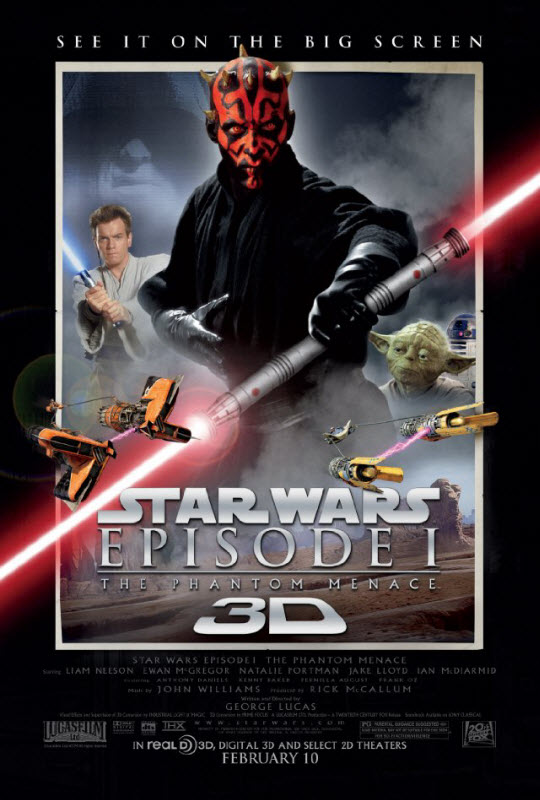
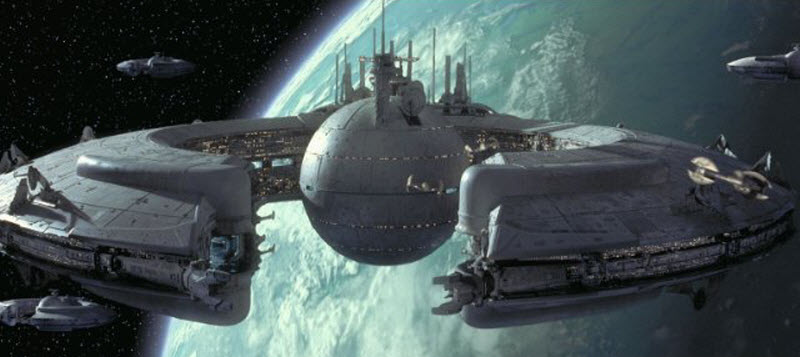
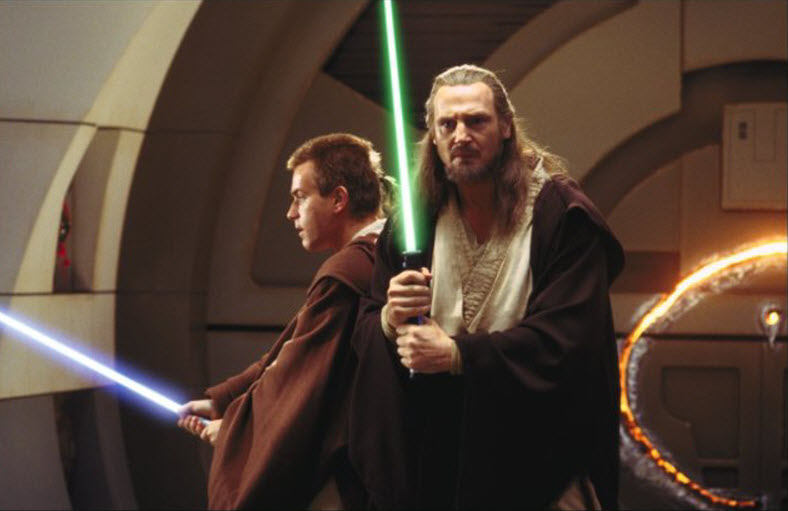
“TPM” is the first movie in a three-part trilogy, which predates the first “Star Wars” series by roughly 30 years and evolves around the 10-year-boy, Anakin Skywalker. Anakin will eventually (though not in this movie) become the infamous lord of the sith, Darth Vader. The planet Naboo, headed by Queen Amidala (Portman) is under attack by the Republic Trade Federation. This act of aggression is part of a larger conspiracy which her Jedi Knight protectors Qui-Gon Jinn (Neeson) and Obi-Wan Kenobi (McGregor) attempt to unravel. Along the way they meet up with young Skywalker (as well as some familiar characters) and race to free the planet from the grips of the unknown aggressor. The movie picks up steam quickly and brings itself to a boiling yet brilliant three tier climax.
All of the technical aspects of the movie are literally breath taking. The special effects are the best that have ever been seen on film, period. John William’s score, the editing, color, art direction, costumes, and sets are all top notch. Neeson and Pernilla August (Anakin’s mother) all add adequate performances. Jar Jar Binks is the comedy side kick and is someone that the kids will simply love. Just as in 1977, Lucas has raised the bar and set the standard that all movie-makers of this genre will attempt to match.
There is no foul language or sexual innuendoes of any kind which will be refreshing to a lot of parents. However, there are a few intense scenes (any scene with villain Darth Maul) that will frighten small or sensitive children. The violence overall is kept to a minimum. Instead of humans, battle droids (robots) are what bite the dust in destruction. For the most part, this is a film that the whole family can enjoy.
As in all of the “Star Wars” films, the Force is an essential theme in the movie. The Force is an all powerful influence that surrounds everything and keeps all things together. By tapping into the Force, certain people are capable of extraordinary super human powers. Once one reaches a certain point in his/her knowledge of the force, he/she can be elevated to Jedi knight status. On the flip side, there is also a “dark side” which is easier to tap into because anger, fear, and aggression all lead to it. Only by staying calm, patient and passive can one avoid turning to the dark side. Obviously we need to teach our kids what the Bible has to say about all of this. We need to teach them that there is a real force and His name is Jesus Christ and in fact all things were created by Him (John 1:3; John 1:10) and through Him all things truly consist (Colossians 1:17)! Furthermore, they need to know that sin, which we have all committed, (Romans 3:23) leads to the “dark side” and we must accept Christ as Lord of ours lives to get us into heaven (Romans 6:23).

It should be understood that “TPM” is not your average movie, and it should not be critiqued as such. It is, in fact, one third of one. Just as in the first series, Lucas gives us bits and pieces of the overall story and plot and in doing leaves us craving and waiting impatiently for the next installment. With this in mind, any plot or story lapses, perceived or actual, should be taken under the premise that there is more to come. Lucas has once again shown himself to be not only a master story teller and fine director but also one who is willing to produce an action-packed epic suitable for the entire family and to take all the necessary risks and the negative attacks to get that accomplished.
See list of Relevant Issues—questions-and-answers.

…As for the force, let’s not forget that movies are the last mass-accepted public art form and more importantly the biggest “forum” for discussing issues and ideas in the world. The fact that what will probably be the largest grossing film in the world encourages people to discuss the issue of faith in God (by the very prominent inclusion of an imaginary religion) is fantastic. The force as portrayed in this movie has many aspects that can be related and contrasted to christianity and can act as a springboard to spreading the gospel. (virgin birth, will of the force, midichlorians speaking to people, trusting the force, etc.) And all this in a movie that can be watched by all ages without offense.
The Church should be excited about such an opportunity and act accordingly. By the way, there is NO religion based on the Force as far as I know. Are we to be worried about converts or something? Why all the fear of the force? Use the topic of the force to discuss the truth with those who do not yet know The True and Living God!
My wife and I, who loved the first three Star Wars films, were very, very disappointed with this film. The characters were all hollow, emotionless characters that one could neither hate nor love. The story was weak and a poor vehicle for the characters. The film was nothing more than a glorified Muppet movie. It was like Lucas has said, “Story? Don’t need it. Characters? Don’t need them. Just fill the screen with special-effect, turn up the volume to ear-splitting level, and people will never know the difference.” There are some beautiful scenes of other-wordly landscapes, but even those can’t save this poorly conceived, over-hyped dog.
After reading the reviews and comments, the one I want to specifically address is the one is this issue about the “lie” that we need to expose about the Force encompassing both good and evil and how we should expose it as a false allegory for God. Let us not forget that Satan was a fallen angel, and although God has no dark side, clearly he created beings of free will, angels and men, which have turned against him.
The issue is not as simplistic as the critic wrote. And as created beings with free will, we are free to choose the path we take, and clearly in the Star Wars movies, the path to good is much more difficult than the path to evil. The other issue I want to address is the “immaculate conception” of Anakin. If you substitute “holy spirit” for midiclorian and God for Force, one of the lines of dialog is akin to saying “he was conceived by the power of the holy spirit” and “when you quiet your mind, you can hear the voice of the holy spirit talking to you, telling you the will of God.” I don’t remember the lines verbatim, but the analogy is VERY close.See all »
I’m sorry but my wife and I were bored with this one. It seemed to us that the characters were very weak. It was almost as though their only role was to transition between the special effects. To see if I am just getting old, I went home and looked at “The Empire Strikes Back.” It was a blast! The characters were distinct and fun. You could get next to almost any of them and enjoy their uniqueness. I kept wanting to say: Lucas, if it ain’t broke, don’t fix it. I would like to have seen the previous characters even if played by new talent. As it stands now, I am not even sure I care when or if Episode 2 comes out. I am sad for the letdown.
…In regards to the mish-mash of religion issue, I saw an interview where George Lucas was being interviewed about the spirituality present in the Star Wars movies. He was questioned about what its purpose is. His reply was… he wanted to get people thinking about spirituality and find a God, something higher than themselves. He wanted to get people questioning and searching out religions. We, as Christians understand that many of us embarked on a quest of this nature, and God’s word tells us that when we seek God He will meet us. Even though it may be a long shot, George Lucas could be helping someone find the true God.
…(1st) I couldn’t agree more with his statement, “… The Force is an essential theme…” (2nd) When referring to the “Dark Side” [the reviewer] doesn’t mention that The Force encompasses BOTH GOOD and EVIL. This is an extremely significant aspect of The Force, yet an extremely subtle lie being fed to untold millions of viewers and should be forcefully exposed by Christians, Films for Christ, and folks like Kyle Suggs. Let’s remember that the one true God “has no evil in Him”; He is not even able to sin! Christian adults and mature Christians of all ages can understand the difference here, but can a weak Christian, an unbeliever, and our children, no matter if they are believers?
The fact of the matter is plainly that The Force clearly possesses both good and evil, making it essentially the equivalent of Satan, as even Satan can do good things, but because he’s evil, even his good actions are wrongly motivated, and therefore, evil, too. My question to Kyle Suggs, to Eden, and to all Christians: are we all seeing and then exposing to the world, this subtle, yet serious aspect of The Force and how evil it actually makes The Force and makes it diametrically opposed to Our Heavenly Father?! I suggest here, we have a movie where the “good guys”—the guys we’re cheering for, are actually folks who are constantly needing to focus in on and tap the “good side” of a god and idol that is also capable of much evil.See all »
Was this a good film? Yes! Was this an entertaining film? Yes! Was this a film worth watching again? Yes! Was this a Christian film? Well… I sought that question out for myself. Mind you, I’m still learning what it is to hear and recognize the voice of the Lord, but after the movie was over (me still in a hypened state from the movie), I asked the Lord, “What do You think about this movie?” Very distinctly and very clearly the words I heard (in the form of thought) were, “I hate it.” I don’t think that was my own thought, because I had no leanings that way whatsoever. So I asked, “Why?”
Well, according to this movie, there are these microbes (I forget what they called them specifically) that live in the cells of all living creatures which communicate the Force to the one carrying them. The more microbes one has, the greater the power of the Force in that one. As it turns out, Anikin has more of them than anyone has ever seen. According to his mother, Anikin had no father.See all »
I think there needs to be some serious loosening up over these movies. This was a great movie (I gave it 4/4 out of 5) with a wonderful story. More importantly, as a single part of a greater whole, the story begins telling the tale of the redemption of a fallen hero: a young man with so much faith and promise who will eventually fall to sin. I did have a minor problem with the virgin birth, but the movie hinted at a more biological explanation, with its explanation of the Midicholorians (the microscopic cells that make up the force).
Overall, I would recommend this movie, with the standard recommendation that parents interpret it for their children. Remember: 1) It’s just a movie, albeit an exceptional one. 2) Your kids will still listen to your ideas about God, and will probably just interpret the light side of the Force as Christianity and the dark side as the devil, so don’t worry! 3) Look at the story as a whole. It’s about redemption, forgiveness, prophecy, and salvation; with a good bit about the consequences of sin!
…In “Phantom,” the Force is described as being alive and having a will, which I think brings it a step closer to theism than traditional pantheism. A separate, more negative parallel between Christianity and the Star Wars mythos is the fact that Anakin is the product of a virgin birth. While I appreciate Christ-likeness in fictional characters, I feel this parallel is just too close for comfort. Also, there was an emphasis throughout the film on “following your heart” without giving attention to the role of external authority. However, there was no swearing, nudity, or excessive violence, and the heroism of the protagonists was inspiring and enjoyable to watch. Overall, I recommend “The Phantom Menace” as a fun, if spiritually-unsound, adventure flick.
I expected much more from this movie, and while I really enjoyed it, it was a disappointment. …there is way less emotional impact in many scenes than I’m sure Lucas intended. In many ways, I feel this movie should have been at least a half hour longer, and more consistently paced. The other problem is many of the actors seem to lack a certain spark that infused those in the original trilogy. Lucas often gets better performances from his CG aliens. …This really is one of the best family blockbusters I have seen in the past couple of years. While it has significant flaws that prevent it from being a great film, it is still well worth it for all those looking for excellent entertainment. It is a rushed, ambitious introduction of the galaxy far away; a lot of fun, but it seems like just a teaser for the hopefully much meatier fare coming in Episodes 2 and 3.
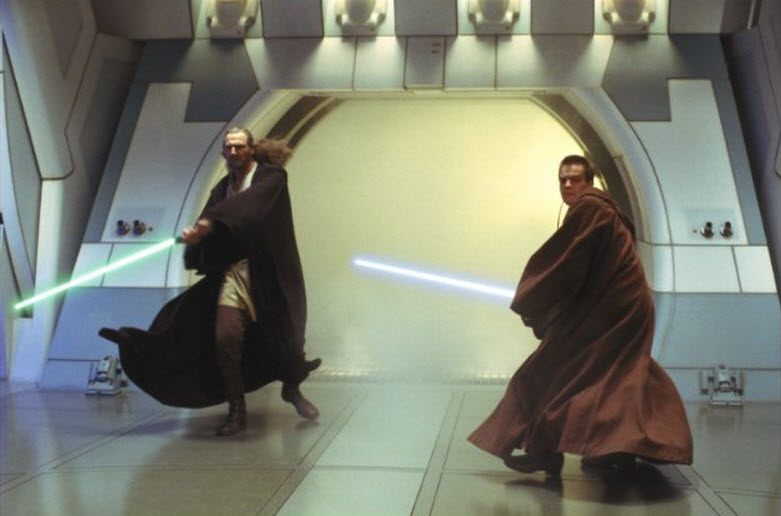
It is an amalgam of both Christian and man-made religious perceptions. Lucas does not talk against spirituality; rather he addresses it in the fictional context of his universe. Still, some elements have not changed in this fourth film—good is good, evil is evil. There is no sex, nudity, or language in the film, and only a hinted romance between Qui-Gon Jinn and Anakin’s mother Shmi (Pernilla August) that is more romantic and noble befitting a Jedi Knight and a gentleman of the first order. The violence is kept mainly to machines vs. machines, though the final light saber duel may be a bit intense for younger children…
…George Lucas wants this movie to cause people to be more interested in spirituality which could be used by Christians to talk to non-Christian Star Wars fans. A conversation at the end between Obi-Wan Kenobi and Anakin describes a relationship to the force similar to how Christians listen to the Holy Spirit and seek to do God’s will. On the other hand there are ideas from eastern religions. Restoring a balance to the force is a theme in this movie that probably has Taoism as a root. In this movie the force has a will which the Jedi knights learn by clearing their mind (as eastern mystics do) which disagrees with the Christian concept of meditating on God’s truths…
This movie is not a good Christian Movie. …with it’s New Ageism force, it shows us that we are our own “inner god.” Many people take the philosophy of the force seriously. …this was not a great movie from a movie point of view. It was way over hyped. Nothing new or original was presented. …people say that Star Wars is a guide to the way our lives should be. It isn’t. Remember it’s “May God be with you” not “the force.”
A lot of stuff with him appears to be cartoony slapstick more than anything realistic. Squeaky clean with language, sex (all women are dressed modestly), no one gets stone drunk, and any smokers I can think of were clearly negatively lit (as in, showing that smoking is not good). A lot of violence was intense and somewhat random (an approximate pre-teen boy gets blown up 5-10 minutes into the movie with his captain, totally not needed, but not worth hating the entire movie over), but the majority of it was “Good vs. Evil,” which is different than the “violence for the sake of violence” stuff seen in movies like “Clockwork Orange.” See all »
Moral rating: Good / Moviemaking quality: 4
Moral rating: Average / Moviemaking quality: 3
I believe people are taking the movie too seriously. Sure, they do dwell on the spirit realm, but considering that there is no actual religion such as the Force, it’s safe. If Lucas based the Force on Buddhism or another actual religion which he could promote, then I would be worried. As a Christian, I feel this is a great movie with incredible effects. No nudity, sex, language, and very little violence. All this added to an incredible, well-made movie with a great story line. This is an ideal movie to take your kids to. My only complaint about the movie is that Jar Jar Binks—the computer animated alien—was extremely annoying. He has a high-pitched voice which can get on your nerves alone. Not only that, but he constantly says stupid things and acts like a freak. I’m willing to look over this part and to say that this is the best movie I’ve ever seen.
PLEASE share your observations and insights to be posted here.
Everyone objects to Anakin being the “Chosen One” born of a virgin. They think he’s supposed to be a mockery of Christ. But, I think that’s not it at all. Sure, the Jedi THINK he’s the Chosen One, but chosen by whom? The Bible speaks of many false Messiahs who will come, looking and seeming exactly like the real thing, but not the real thing. Qui-Gon believes in the boy, BUT WE KNOW HE’S WRONG! Perhaps Anakin is the Chosen One of the DARK side of the Force; not Christ, but Antichrist. That, to my mind, would seem the more obvious interpretation.
However, even a child of evil has the free will to choose good, just as in the Devil’s Advocate. One final note: When I thought of how good and kind Anakin was in this movie, and realized how evil he would become in the future, I felt great sorrow. I said to myself, “Why must such a wonderful person be lost to darkness? How sad!” Then, I believe I heard God’s reply, “Now you understand how I feel.” Indeed. God created us all in His image, and yet, many of his beloved children are lost to the darkness each day. How great His sorrow must be! So let us choose righteousness and give God the joy of seeing his lost children come home.