Doubt
 for thematic material.
Reviewed by: Rev. Bryan Griem
CONTRIBUTOR
| Moral Rating: | Better than Average |
| Moviemaking Quality: |
|
| Primary Audience: | Adults |
| Genre: | Drama Adaptation |
| Length: | 1 hr. 44 min. |
| Year of Release: | 2008 |
| USA Release: |
December 12, 2008 (limited) DVD: April 7, 2009 |
I think I was sexually abused, but I'm not sure. What is sexual abuse, and what can I do to stop the trauma I am facing now? Answer
Does God feel our pain? Answer
Why does God allow innocent people to suffer? Answer
How can we know there’s a God? Answer



Are you good enough to get to Heaven? Answer
| Featuring |
|---|
| Meryl Streep, Philip Seymour Hoffman, Amy Adams, Viola Davis, Lloyd Clay Brown, Joseph Foster, Bridget Megan Clark, Michael Roukis, Paulie Litt, Matthew Marvin, Carrie Preston, Lydia Jordan, Molly Chiffer, Evan Lewis, Dennis Albanese, Timothy J. Cox, Amanda Marie Florian, Brianna Leann Florian, Tiffany Ashley Florian, Suzanne Hevner |
| Director |
|
John Patrick Shanley |
| Producer |
| Scott Rudin, Scott Rudin Productions |
| Distributor |

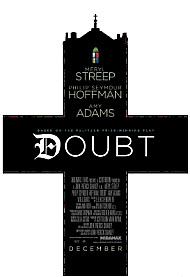
“Based on the Pulitzer-Prize winning play”
The movie’s title describes both its storyline and the mental state of the audience when the credits roll. This is no fortuitous coincidence but intentional cleverness on the part of award-winning author-director, John Patrick Shanley, who filmed on location in the same parochial school he had attended as a Catholic youth in the early 1960’s (the setting of the film).
The movie is an adaptation of his original play “Doubt, A Parable” for which he received the Pulitzer Prize. This award winning play-turned-film is cast with award-winning actors, and the result is a quality piece that addresses many issues at once while providing few answers of any certainty. Slice-of-life, we might call it, but that with contemporary concerns projected back and added to the author’s perceptions of his childhood experience.
The story confines itself to an institution where differences are apparent, and where conflict may arise as it does anywhere. Thankfully, opposition is in-house, and the representatives of God are not pitted against morally superior outsiders, as is so common a theme these days. No, in “Doubt,” there is an old-school disposition championed by the head nun, and a more progressive one exemplified by the new parish priest, and when the two collide there is no doubt going to be trouble.
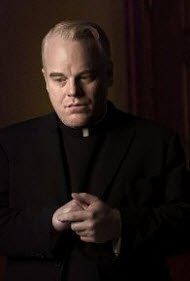
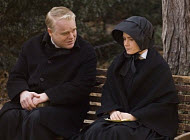
Actor, Philip Seymour Hoffman, plays the kindly and forward thinking Father Flynn, a role that is a far cry from the lascivious and profane Reverend Veasey he portrayed in the movie “Cold Mountain.” Despite the obvious difference in those two characters, doubt soon arises concerning the true nature of the Catholic priest, also, and this is part of what makes a lot of Christians cringe—that ostensible leaders of Christian faith should have their virtue doubted whenever they appear on the scene in every Hollywood production.
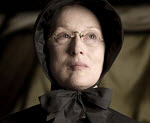
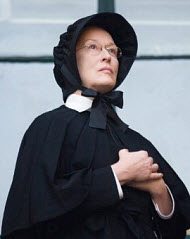
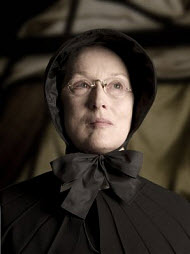
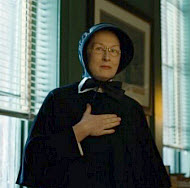
Father Flynn’s jovial and unfettered character is juxtaposed with Sister Aloysius’ (Meryl Streep) cold and disciplined austerity, but one doubts whether either has all their crosses teed. The audience will like the priest and will want to side with him, but questions concerning his past bring the viewer fast into the twenty first century, as unsavory thoughts of Catholic pedophile cases come to mind. Has he really done anything or is it all in the imagination of the witch-hunting nun? Doubt.
Issues that the movie invokes include: gossip, sexuality, love, compassion and, of course, doubt. There may be others, but the above described situation is primary, and the “natural” inclination of the boy that factors into the story is raised by his own mother who implies her young son is gay. More doubt. Still, there appears to be only expressions of goodness coming from the priest, and nothing but conniving and unchristian nastiness on the part of the habited Principal. Sister Aloysius even justifies her actions with, “when you take a step to address wrongdoing you are taking a step away from God, but in his service.” Is this just her ends-justifies-the-means philosophy, or is it more revealing of her looming crisis of faith? By the end she breaks down over her own doubts.
The priests in the movie are smoking, drinking, social types, whereas the nuns are quiet, strict, and frown upon such frivolities as adding sugar to tea or using ball point pens instead of the traditional fountain variety.
Some minor vulgarity is uttered by both groups, as Hell is said to be beaten out of a boy, and the whole mess is damned to go there according to Aloysius. BS is also uttered by one, but overall, the questionable language is held to a minimum.
While the kids are not shown smoking or drinking, it is implied in a couple of instances, and there is no violence to speak of except perhaps when the nuns occasionally slap the back of the heads of distracted students.
While audiences will doubt that this is a Christmas movie, the setting is at that time of the year, and carols are practiced, snow is on the ground, and questions about including secular numbers in the church play are discussed between the two opponents and the middle player in the film who is the one most likely to represent the viewer.
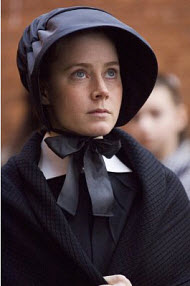
Actress Amy Adams plays Sister James, who believes in Father Flynn but lives under the tutelage of Sister Aloysius. Through her eyes the audience hears both sides, but in the end remains as she, full of doubt. “Doubt” is an interesting film, a period piece with timeless subjects. Good and bad are portrayed, and thinking is encouraged. It is not a movie for the whole family, but one that I could recommend to adults.
Violence: Minor / Profanity: Mild / Sex/Nudity: None
See list of Relevant Issues—questions-and-answers.

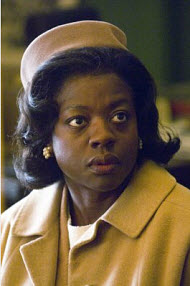
And yet, nothing is skirted around. The issue is addressed head-on. Sister Aloysius thinks Father Flynn is taking advantage of Donald Miller, the first black kid in their Catholic school. Is she right to make that assumption? Is Sister James being foolish in accepting Father Flynn's word that he didn't do anything? What should Mrs. Miller do when she must choose between her son's education, which consequently affects his entire future, and his current predicament? It is all very doubtful.
And that's the way it should be. This movie makes you think, and think hard, because these issues do not have easy answers. Anyone who is old enough to appreciate such conundrums should watch this film, because by the time they're old enough to do so, they're also old enough to handle the material in this film.
I also want to point out that this movie has a profound respect for Christians. Sure, the main characters all do bad things, but that is because they're human, not because the director/screenwriter is trying to take a jab at religion. The Christian approach is not the only approach in this film, but it is almost always present. Basically, this film definitely deserves a moral rating of “Good.” I personally wanted to give it “Excellent,” but I know that basically I would be the only person to think so, and I'm trying in writing this review to be helpful to more people than just myself.
Moral rating: Good / Moviemaking quality: 4½
The setting is dark almost film noir style. There are no special effects other than weather in this film. The dialogue is the best part of this film. When was the last time a film was remembered because of the dialogue? I believe that this film can be a pathway towards healing for those who have been molested or have other sexual issues in their life. …
Moral rating: Good / Moviemaking quality: 3½
And even how we rate movies on this site reflects the need to rethink our ways—we focus on pettiness like—counting cuss words and disregard the effects of the medium itself (The Medium is the Message idea from Marshall McLuhan), the spiritual aspect of all things we interact with (including film), humanity, beauty of life.
We need to see ourselves as less than the Pharisees, because we can't even keep the 600 some rules ourselves, we just make up ones that suit our own needs and hold up our own selfish worldviews.
It is time to wake up. Go read some Jacques Ellul, Marva J. Dawn, or just this movie to get you started. =)
Moral rating: Excellent! / Moviemaking quality: 4
On the other hand, Sister Aloysius is portrayed as conservative, regressive and certain in her views. She does not really seek the truth of the situation but seems irrationally opposed to Father Flynn. In the end of the film she confesses grave doubts and is very unhappy. Certainty then becomes hypocrisy.
My contension is that this movie is a powerful presentaion of humanistic agnosticism couched in the trappings of religion. The moral issues raised are even set in a humnistic fashion and are secondary to the real message. The gospel of salvation, the true place of Christ as the real answer to sin, and true forgiveness are ignored.
Moral rating: Extremely Offensive / Moviemaking quality: 5
Otherwise, the 2000’s pedophilia scandals would have never delayed so many years being uncovered. On second thought, I guess I have another complaint. The film ends so abruptly, making me wonder why was Sister A. saying she had doubts… Doubts of what? At the end of the movie I stayed with a big question mark in my mind. So the purpose of this movie is? Oh, I see, the director wants to be sure that he can create doubt in us, the audience. Doubts about what Sister A. doubts, doubts about the possibility of a crime or not. That’s not funny; I don’t like a movie director making me waste my time.
Moral rating: Average / Moviemaking quality: 4½
Moral rating: Excellent! / Moviemaking quality: 5
My Ratings: Moral rating: Better than Average / Moviemaking quality: 4½