The Odyssey
 for violence and some language.
Check back later for review coming from contributor Alexander Malsan by Jul 19
| Moral Rating: | Very Offensive |
| Moviemaking Quality: |
|
| Primary Audience: | Adults Young-Adults |
| Genre: | Epic Action Adventure Fantasy Adaptation IMAX |
| Length: | 2 hrs. 52 min. |
| Year of Release: | 2026 |
| USA Release: |
July 17, 2026 (wide release) |


 About Ancient Greece in the Bible
 Answers about idolatry and false gods in the Bible and history
Greek mythology


| Featuring |
|---|
|
Matt Damon … Odysseus, the legendary Greek king of Ithaca Tom Holland … Telemachus, son of Odysseus and the prince of Ithaca Anne Hathaway … Penelope Robert Pattinson … Antinous Lupita Nyong'o … Helen of Troy (Menelaus’s wife) / Clytemnestra (Helen’s sister and Agamemnon’s wife) Zendaya … Athena Charlize Theron … Calypso Elliot Page (born Ellen Page) … Sinon Jon Bernthal … Menelaus Himesh Patel … Eurylochus Josh Stewart … Antiphates Mia Goth … Melantho Samantha Morton … Circe Logan Marshall-Green … John Leguizamo … Eumaeus Ryan Hurst … Mentor Benny Safdie … Agamemnon James Remar … Andrew Howard … Polites See all » |
| Director |
|
Christopher Nolan |
| Producer |
|
Christopher Nolan Emma Thomas Syncopy [Great Britain] Wildside [Italy] Universal Pictures |
| Distributor |

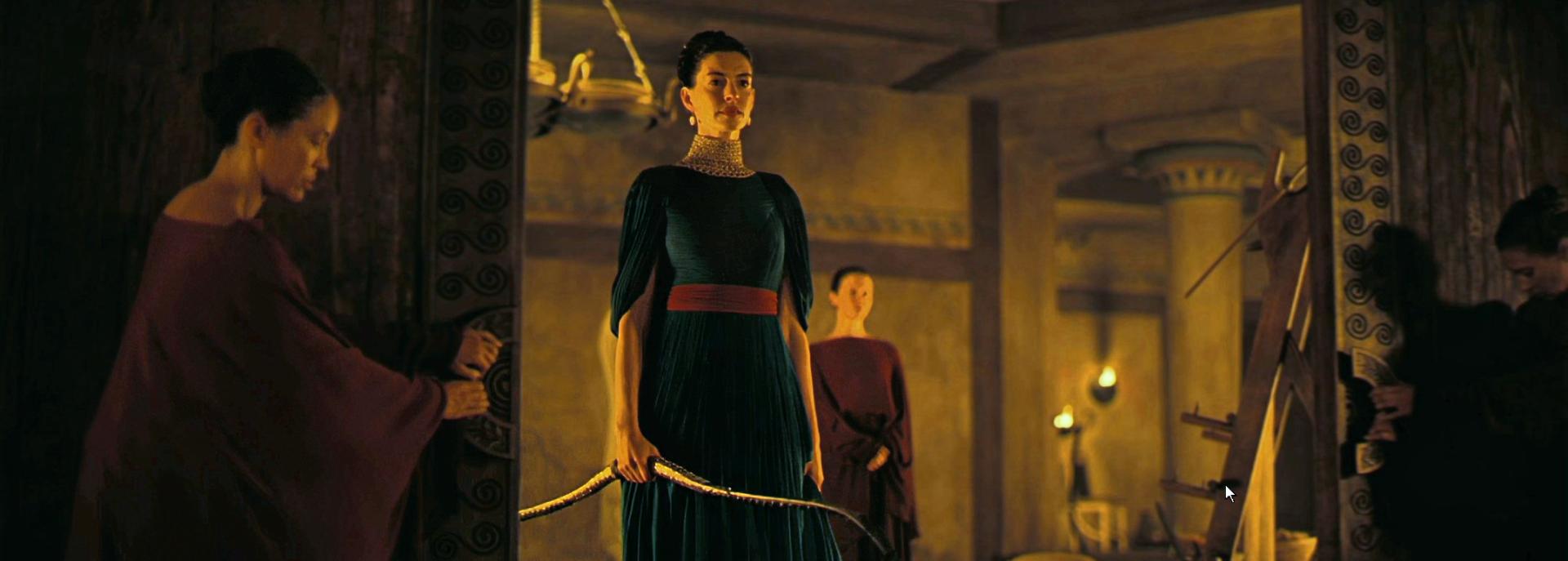
It’s been ten years since the end of the Trojan War. You know the one: Odysseus, the King of Ithaca (Matt Damon) and his men crawled inside a fake horse, the Trojans brought the horse into their walls and then surprise! Odysseus and his men crawl out of the horse, open the gates for their allies, and slaughter every Trojan (yep, even the women and children). Odysseus was forced, by his commander, Agamemnon (Benny Safdie), to leave his wife, Queen Penelope of Ithaca (Anne Hathaway), and, at the time, his young son, Telemachus (Tom Holland) to fight the Trojans.
Ever since, without Odysseus, Ithaca has become a different place entirely. With many believing that he will never return home, men have taken quarters in the King and Queen’s banquet hall, hoping to woo and win over the heart of Penelope, hoping to become her next husband and King of Ithaca. These are not prim and proper men though: they drink in excess, swear, belch obnoxiously. What’s Penelope to do? She can’t very well kick them out, according to the Law of Zeus (which requires hosts to treat complete strangers as if they were family). What a conundrum!
Odysseus has had his own problems. Stranded on an island with the beautiful an immortal nymph Calypso (Charlize Theron), he is given Lotus flowers, supposedly to nullify his physical pain and, perhaps, allow him to focus on regaining his memories. “I must’ve had a family, a home, something.” Slowly he recalls the never ending journey he and his men endured: meeting and defeating the cyclops, the encounter with the witch Circe, running into spirits from Hades, all that fun stuff.
Sometimes after a long journey all you want is home. They say home is where the heart is though. It just may take Odysseus a little bit longer to figure out how to get home, and where his heart truly lies. It’s an odyssey after all…
The Odyssey, truthfully, is a story of defiance of the “gods” and of everyone else around Odysseus. Indeed, Greek mythology is at the very heart of this tale. The Ithacans followed the Law of Zeus without question and men (and women too) used this to their advantage. Odysseus, as s reviewer pointed out, “broke the Law of Zeus by using the Trojan horse to topple an entire nation” and his men raped, pillaged, and beheaded their enemies, even innocent men, women and children. As a result, Odysseus’ punishment from the Greek gods and goddesses is a nearly never ending journey where his life is always in danger, his hunger never satisfied, his memory nearly gone, and suffering which he passes along to his fellow Ithacans (I was frustrated when Calypso tells Odysseus in the film, “You are not responsible for the actions of your men” when Odysseus was in charge of them and was with them the entire time everything occurred. His arrogance, his cockiness, his egotism was nearly his and everyone else’s downfall, and while I might not remember specific details of The Odyssey from high school, I remember the man himself, what he represent and what the bigger picture is.
Christopher Nolan’s adaptation of The Odyssey seems to look at Odysseus and his journey and remember that history always repeats itself at some point; the mistakes and mindframe of ancient Greeks during Odysseus’ time are still, in some respects, some of the same mistakes we made today. I don’t think that’s all there is to this version. Sure, certain elements from the original tale have been altered, but there is still a strong story to be told and the messages can still be found: be wary of your pride, be humble in all things, etc. But these messages come at a price, though…
Content-wise, some have stated this is Nolan-lite, as Nolan’s films tend to be dark, incredibly violent, and fairly complex in the messaging. I would STRONGLY disagree with this sentiment (and I’m one of those individuals who has seen many of Nolan’s films: “The Dark Knight” Trilogy, “Dunkirk,” “Oppenheimer” and many more). The violence is at the same level, if not greater, than anything you find in the films I mentioned (even “Dunkirk,” with its prolonged scenes of violence isn’t as severe as “The Odyssey”). Men, women and some children are seen numerous times either stabbed or having their throats cut, one young person is beheaded, soldiers are eaten (one of them in a very graphic way), the list is long (more on that later). Nolan-lite? No. This is Nolan-heavy and sometimes this violence overshadows the story.
I will say, however, Matt Damon gives a relatively quiet, yet still strong performance as Odysseus. Anne Hathaway does her best with Penelope, and at times gives a very heartfelt and heartpounding performance, but there are times I felt she is underutilized. Tom Holland, sadly, looked like he was just reading the lines for the first time. I do have a couple casting issue: casting transmale actor (actress?) Elliot Page (formerly Ellen Page) in a supporting role (I say supporting as he only has only about 10 minutes of screen time total but still plays a vital role in the story). Elliot Page is a very strong, outspoken advocate of “trans” rights and LGTBQIA rights (think Ellen DeGeneres but more obnoxious and in-your-face).
I’m sorry, this Wokeness has to stop especially when it’s historically inaccurate in every way, shape and form. you’re taking a, supposedly, 3000 year old classic, modernizing it and shoving your propaganda-spewed rhetoric down everyone’s throat. I’ve said it before: no one, and I mean absolutely NO ONE on planet Earth goes into a theater and says, “I hope Hollywood will shout another political message at me.” Enough is enough.
Content of Concern
VIOLENCE: Very Heavy and there is a LOT of violence, so bear with me. A soldier is shot with arrows. A wild pig is shot and killed. A wild pig attacks. Someone mentions Agamemnon threw his daughter into the sea (there’s a flashback where he is walking his daughter to the sea). Telemachus attacks a suitor who tries to kill Odysseus’ dog. Odysseus and their crew are seen burning homes, killing innocents, and pillaging their homes. The cyclops grabs and eats soldiers (one in graphic detail). A man is kicked and killed by the cyclops. The cyclops then grabs another soldier and the men stab him in the eye. Odysseus shoots the cyclops.
A man drowns inside the Trojan horse. Knives are jabbed through the horse and stab someone. Trojan soldiers are seen being assassinated with swords and arrows. Odysseus’ men are shot with arrows. Giant forest soldiers march, stomp on and kill soldiers (this becomes a massive battle and we see a lot of dead bodies on the beach). Boats are seen being flipped over and giants are seen slaughtering soldiers (Odysseus and his surviving men witness this from the boat they escape in, leaving them helpless).
Someone kills a deer on screen. Two goats are sacrificed and someone draws their blood into a bowl (some creatures from the dead end up drinking the blood). Agamemnon is seen being killed in a bathtub. A boy is said to have killed his mother. Birds are shot out of the sky. A man jumps in the ocean and swims toward the Sirens (who, we assume, lead to his doom). Odysseus ties himself to the ships mast as they sing their song (he is tortured by their song and nearly goes insane).
A rock, worm-like creature grabs some of Odysseus’ men and brings them into a mountain. There is a massive sea storm and the ship is split in half, with some of the men drifting away on a floating board. Odysseus washes up half-conscious. Odysseus is to told to give himself over to the sea god, Poseidon, for his punishment (he is punished by waves). Men knock out a man and steal his pigs. We see some skeletons on a fire.
There are drownings, poisonings, and beatings. Odysseus stabs assassins. Someone throws a chair at a beggar. A beggar is beaten and kicked. Soldiers are seen storming Troy and killing civilians and burning homes (some have their throats cut). A young girl, a priestess, is beheaded (the camera cuts away to a statue’s head being severed). Someone takes their bow and kills the suitors. People are stabbed and a main character is killed. In a terrifying scene, soldiers eat like pigs and then turn into pigs. The witch Circe turns them into pigs by putting her arms down their throats and twisting their facial features and other body parts.
VULGAR LANGUAGE: F*cking (1), F*ck off (2), Piss, Sh*t, Burn the b*stards (1)
PROFANITY: D*mn (1), D*mned (1)
SEX: Someone says, after looking at a woman, “You can’t blame me for looking.” Odysseus and Penelope have sex before Odysseus has to leave. Brief reference made to sexual violence.
NUDITY: Many naked men are shown in a scene (not graphic). Odysseus is seen shirtless in bed and in a couple other scenes as well. Cyclops is completely naked, but his genitals are never shown. Pigs turn back into men, and when they do they are partially nude. A commander is seen bathing in his bathtub (only partial nudity).
ALCOHOL: People are seen drinking and there is drunkenness. Calypso had been giving Odysseus a narcotic lotus flower drug to cloud his mind and have him only focus on physical pain.
OTHER: Someone tries to convince the queen into believing he loves her but he is in love with someone else. Young boys are called to fight the Trojan war. Odysseus and crew steal things. Telemachus disobeys his mother to find Odysseus. The men mutiny against Odysseus.
OCCULT: Moderately Heavy. There are multiple discussions about the gods and how they control people’s destinies. The Law of Zeus is commonly mentioned. Characters claim the gods granted them victory. As mentioned earlier, Odysseus throws himself into the ocean to make amends to Poseidon. People say the gods grant insights and truths. A character asks Circe about how to get home and she tells him his future. Deceased soldiers are seen rising from the ground and speaking to Odysseus. There is a discussion of entities called “shades” (souls of the dead) in Hades that meet the new dead but do not comfort them.
WOKEISM: As previously mentioned, one of the actors (actress?) in the Odyssey is Elliot Page (formerly Ellen Page before she transitioned to a man), an outspoken advocate of transpeople’s rights, the right for children to transition without parental consent, etc. This is not someone you want representing a self-sacrificial character like the one he/she plays. Another outspoken actress, Lupita Nyong'o, who plays Helen of Troy, is also a strong advocate of LGBTQ rights and practices.
Morals
Pride is one of the central themes of The Odyssey (I’m sure there are others. This one stands out the most for me). Odysseus’ pride and overconfidence in himself leads to the downfall of all those around him (his men are killed, his family and his kingdom are brought down to near ruin).
The Bible is clear that pride comes before the fall (Proverbs 16:8) and indeed Odysseus falls hard. As Christians we are called to put away our pride, be humble in everything and in all circumstances to the point of being a servant to others.
“Humble yourselves, therefore, under the mighty hand of God so that at the proper time he may exalt you” —1 Peter 5:6
For thus says the One who is high and lifted up, who inhabits eternity, whose name is Holy: “I dwell in the high and holy place, and also with him who is of a contrite and lowly spirit, to revive the spirit of the lowly, and to revive the heart of the contrite. —Isaiah 57:15
And lastly in Paul’s letter to the Colossians he states:
“Put on then, as God’s chosen ones, holy and beloved, compassionate hearts, kindness, humility, meekness, and patience…” —Colossians 3:12
Closing Thoughts
Frankly, I’m frustrated with this rendition of The Odyssey. Does it stay true to the original story? Only partially. When you think you’ve found the most authentic version of this three thousand year old tale, Nolan does something absolutely horrid: using trans male actors or LGBTQ supporters to “not offend anyone” in his film. Let’s be honest, 3,000 years ago if there were trans-people, it was not classified as such and you would never disclose it publicly for fear of being shunned, jailed or even worse… killed. So why then add this historical inaccuracy to a timeless tale?
Aesthetically (not taking into account the content of concern), there is some picturing of this tale most of us had to read at some point in our schooling.
However, consider the amount of violence found in “The Odyssey.” It’s a lot, even by today’s standards. People are beheaded, stabbed, eaten, and shot with arrows. There’s more sexual content and nudity to contend with as well, and I walked out of this film with a sense of unease… certainly not warmth.
I personally don’t recommend anyone going to see this film: children, adults, teens, NO ONE. Paganism, the occult, and polytheism are incredibly strong in this version and I don’t think anyone benefits from watching this. This is one journey you don’t want to go on.
- Violence: Very Heavy
- Vulgar/Crude language: Moderately Heavy
- Occult: Moderately Heavy
- Profane language: Mild
- Nudity: Moderate
- Wokeism: Moderate
- Sex: Mild to Moderate
- Drugs/Alcohol: Mild
If you want to see a movie of Homer’s “The Odyssey”, this film is a poor choice. The title and character names may be the same, but most everything else is quite different, less interesting, less thrilling, less emotional, and less epic.
Audience distancing: frequent reports of too many interferences with becoming immersed in the story, time and place
Many viewers complain about the poor sound mix having made the dialog frustratingly difficult or impossible to understand
Many have said that the first hour of this drags and bored them
The character Odysseus has been changed so much by Nolan that he is now Odysseus in name only. Homer’s Odysseus is much different—well known for being heroic, extremely cunning, intelligent, boldly impudent and deeply motivated by his love for his wife and home. Nolan’s subversive version is a somber, sad leader, guilt-ridden, remorseful, traumatized (PTSD)—with actions, motivations and attitudes much different than what Homer wrote.
“Subversive casting meant to be provocative”
This film is based not on the usual translations of the Greek, but upon a 2017 translation by radical Liberal Feminist Emily Wilson, who is focused on toxic masculinity and deconstruction of white male heros, gender inequality, and a progressive worldviews.
No music at all. Just repetitive beating drums, gongs, striking of scrap metal and such. Many viewers found it irritating, tiring, or lacking.
A classic ancient Greek story based on real places and some historical facts, with added fantasy, is told without any actual Greeks and with inaccurate details. This is at a time when Hollywood is hypocritcally obsessed with identity representation in films.
Modern Greeks are publicly objecting to what Nolan has done and feel their identity, culture and history has been disrespected.
In Homer’s story the various Greek gods are a highly important part of the story. This retelling is drained of almost all that—no male gods, only female, and even they are apparently mere hallucinations or forces of nature.
Rapper “Travis Scott appears as a bard delivering sparse, pretentious lines as though he were reciting verse in an opening, and it lands as an awkward, self-conscious framing device rather than earned piece of worldbuilding.”
Ancient buildings of Ithaca (a very real place in archaeology) were actually very colorful. Nolan’s version is gray, muted and dark—and look more like ruins.
Highly inaccurate depiction of period armor for both Troy and Ithaca, and for the forest giants—appearing more like Cylons from “Battlestar Galatica.”
The primary “Greek” ship depicted is clearly a Viking ship, quite wrong for the time and place.
- etc.
See list of Relevant Issues—questions-and-answers.

Moral rating: Offensive / Moviemaking quality: 5
The book this movie is based on is a story from Greek Mythology. While I have indeed read and enjoyed Greek Mythology since I was a child, I think it is incredibly important to let people who haven’t read it know just exactly what they’re getting into. This is *not* simply a fantasy world with fictional gods in it, a la Lord of the Rings. This is a religion that ancient Greeks actually believed. These are pagan gods that they actually worshiped back then. These vids are not like the real God. None of them are infallible, some of them are downright evil, all of them make mistakes, and the ruler of the underworld is one of the most sympathetic out of all of them (though still feared). For those wary of pagan worldviews, this book is filled to the brim with it.
It might seem like I’m simply stating the obvious, and perhaps I am. But, in my experience, a lot of people are very unaware of just what kind of content is in these stories, and, especially in these past few generations, knowledge of these stories is colored by wildly inaccurate toned down adaptations like Disney’s Hercules or the Percy Jackson books. I want to stress this so that people know; Greek Mythology is *not* like those aforementioned adaptations. Among other things, you’ll find:See all »
Moral rating: no opinion / Moviemaking quality: no opinion
The film goes for a much more understated mythology than the original book. No gods physically appear in the film aside from Athena, Circe, and Calypso. Most notably, the cyclops’s screams are unintelligible, and some members of the crew merely claim they heard him call to “his father Poseidon.” While Odysseus does have trouble at sea, he and his crew only *assume* Poseidon is punishing them, and it is strongly implied towards the end that this wasn’t the case after all. A strong theme of predestination is present. Odysseus desperately tries and fails to stop his crew from eating the sun-god’s cattle, and it’s portrayed very much as something that was going to happen no matter what. Personally, I found this more interesting than the book’s story about Poseidon taking petty revenge.
Among other changes, Circe no longer seduces Odysseus, Odysseus is suffering from amnesia while on Calypso’s island, Odysseus is portrayed as much more likeable here than in the original story.
While I enjoyed this take on the story, I must still warn that there is content in here to be wary of. Firstly, and most glaringly, are uses of the F-word. These do not add to the story, and in fact I found them unintentionally funny (in a “that’s awkward” kind of way, not a legitimately “haha” funny kind of way) because this is set in Ancient Greece. I get that Ancient Greeks wouldn’t have been speaking English at all, but still.See all »
Moral rating: Offensive / Moviemaking quality: 4½
PLEASE share your observations and insights to be posted here.
Well now, it’s 2026. And lot only do we have it, but it comes from one of the few people in Hollywood today to master big-screen spectacle with thoughtful storytelling: Christopher Nolan. The results? Well, how could they be considered anything less than, dare I say, epic?See all »
My Ratings: Moral rating: Offensive / Moviemaking quality: 5