Fireflies in the Garden
 for language and some sexual content.
Reviewed by: Scott Brennan
CONTRIBUTOR
| Moral Rating: | Offensive |
| Moviemaking Quality: |
|
| Primary Audience: | Adults |
| Genre: | Drama |
| Length: | 1 hr. 25 min. |
| Year of Release: | 2008 |
| USA Release: |
October 14, 2011 (select cities, including Chicago, Los Angeles, New York and San Francisco) DVD: February 7, 2012 |




painful childhood memories
abusive father / domestic abuse
unpaid bills
unexpected tragedy
car crash
death of mother
sexual awakening
running away from home
DEPRESSION—Are there biblical examples of depression and how to deal with it? Answer
What should a Christian do if overwhelmed with depression? Answer
brother sister relationship
rap music
mother son relationship

| Featuring |
|---|
|
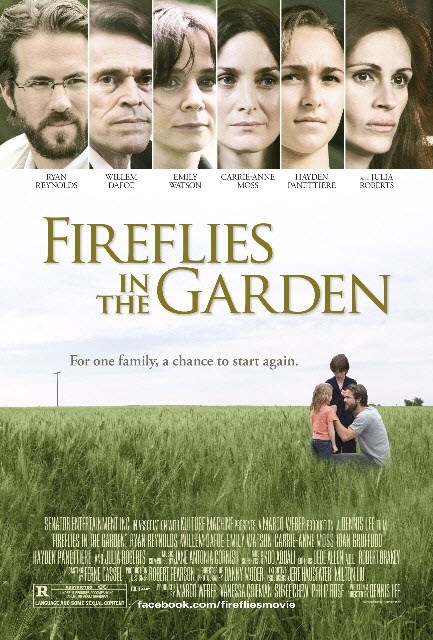
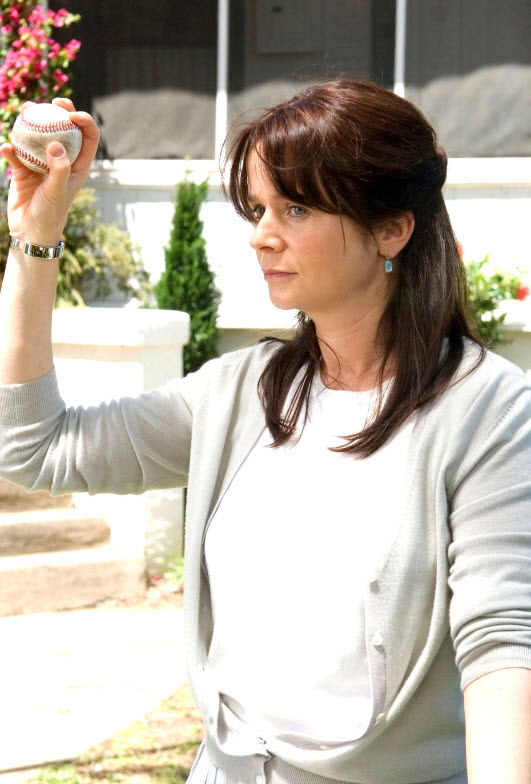
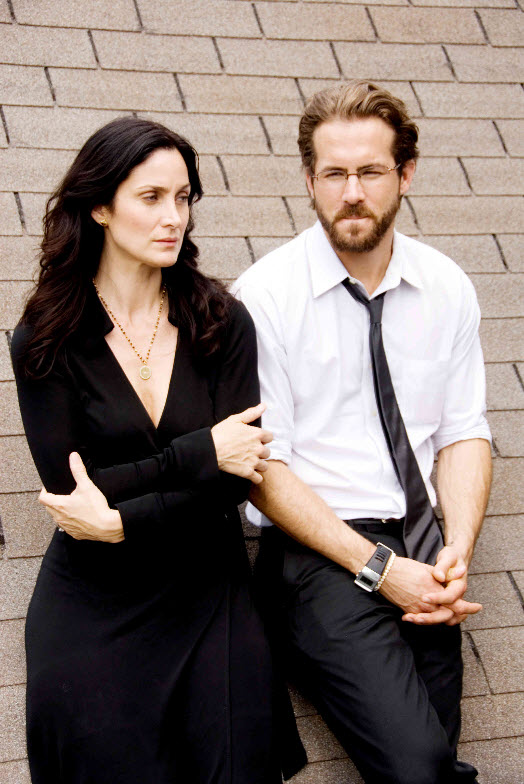
Ryan Reynolds … Michael Waechter Willem Dafoe … Charles Waechter Emily Watson … Jane Lawrence Carrie-Anne Moss … Kelly Hanson Julia Roberts … Lisa Waechter Ioan Gruffudd … Addison Hayden Panettiere … Young Jane Lawrence See all » |
| Director |
|
Dennis Lee |
| Producer |
|
Kulture Machine Senator Entertainment Co. See all » |
| Distributor |
| Senator Entertainment |
“For one family, a chance to start again.”
Robert Frost is one of the most renowned American poets and his infamous poem by the same name, “Fireflies in the Garden” reveals something about this film. The poem goes like this:
Here come real stars to fill the upper skies,
And here on earth come emulating flies,
That though they never equal stars in size,
(And they were never really stars at heart)
Achieve at times a very star-like start.
Only, of course, they can’t sustain the part.
The film was written and directed by Dennis Lee, a Columbia film graduate who received acclaim a couple of years ago for a short film, “Jesus Henry Christ” that was funded by Julia Roberts’ film company. That said, Dennis wrote “Fireflies…” in response to his mother’s death to cancer in 2002, and it’s obvious from the depth of the characters in the film that it’s somewhat autobiographical. The problem is that, like the emulating luminescent fireflies on Earth, the characters can only “achieve at times a very star-like start.” And, “of course, they can’t sustain the part.”
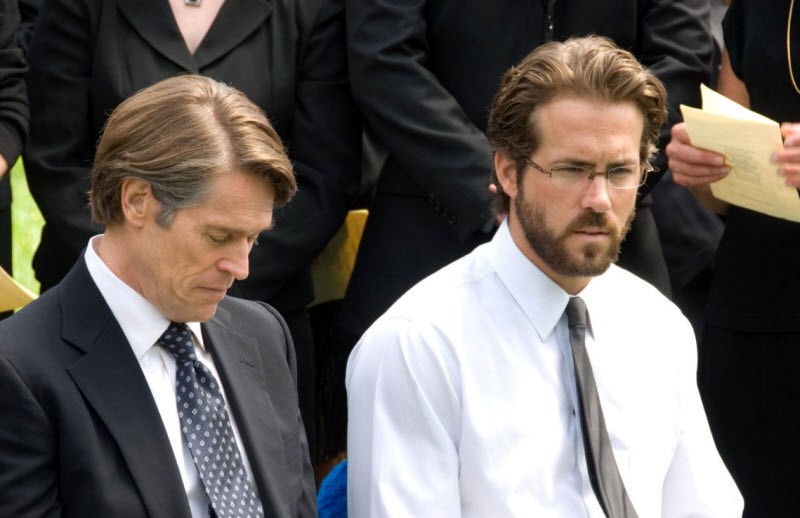
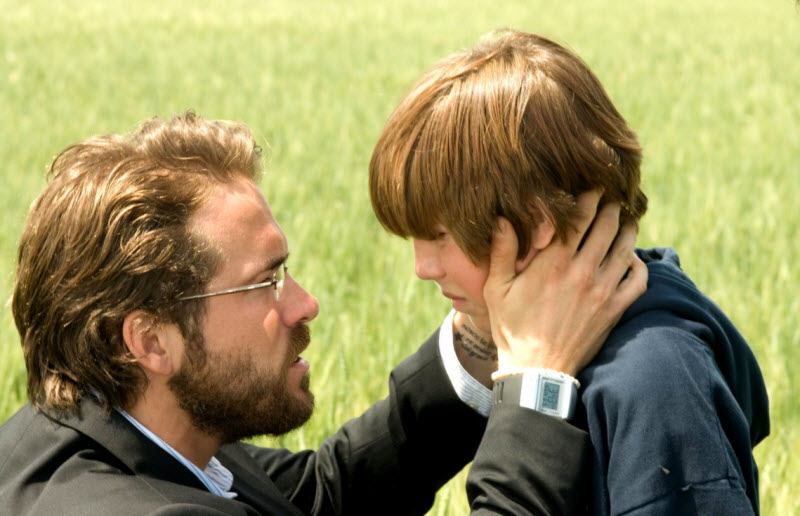
The movie is a heavy drama, with a few light moments centering on the principal conflict between a father (Willem Dafoe) and son (Ryan Reynolds) that is achieved by carefully weaving and editing flashback scenes of his childhood into the story. This is artfully done by the director of photography, Danny Moder (Julia Roberts’ significant other), and it has the feeling tone of similar scenes in my favorite film of last year, “The Tree of Life.” The problem isn’t the story or the flashbacks, as much as it is the overbearing weight of reality portrayed in the film—sometimes with a heavy hand. While the “show me, don’t tell me” method was used well by Lee, what it never did was stick to one story. Just like watching real fireflies in the garden, I never knew which one to focus on.
Content of concern
The film is laced with objectionable material from a Christian perspective, with the use of Christ or Jesus Christ in a profane way no less than twice, several variations of the “f” word, and a handful of other vulgarities sprinkled around for effect, although, compared to the average teen film of today, it wasn’t excessive.
With regards to sex, there is more implied than seen, such as an adulterous affair that is revealed later in the film. There is also a scene of simulated sex (no skin revealed) between Reynolds and his wife in an upstairs bedroom —which is positioned for some comedic relief—complete with the shaking walls, furniture and accompanied by strange sounds—all during a serious soliloquy downstairs by his dad (Dafoe) at the wake of the family matriarch.
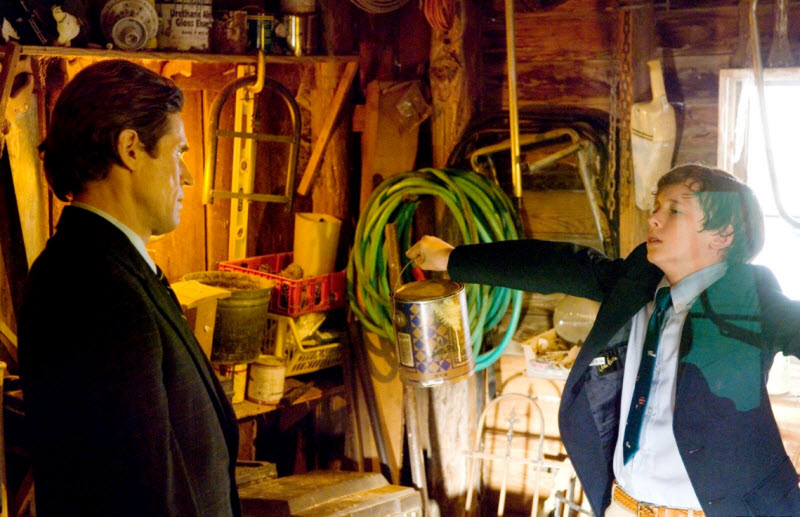
As to violence, there are some disturbing and penetrating scenes in the flashbacks, such as the father inflicting some punishment on the son in a dehumanizing way (holding up buckets for a long period of time) and others with biting sarcasm and intense emotion. Finally, for the animal lovers, there are some semi-violent scenes that include firecrackers in the mouths of fish, and swatting at fireflies with tennis rackets (not catching them in a bottle)—neither of which could be considered an ordinary experience for most kids, let alone adults.
The themes of the film surrounding the conflict in this dysfunctional family are worthy of exploration, but Lee appears to have taken on too many at once. “Less is more” should have been the mantra delivered to him by his executive producers. The agony of carrying childhood pain into adulthood, especially pain inflicted by a parent, is real and well communicated by the actors throughout the film, especially as a lead up to the “forgiveness” that is ultimately extended by some of the characters—although it appeared to be from a humanistic place, rather than a godly one.
What wasn’t clear was why Dafoe’s character is so filled with anger, bitterness, jealousy or resentment towards his son to begin with, although one could assume that “sins of the fathers” were being passed down generationally. Lee also includes some scenes that portray “a form of godliness” in the family—like holding hands during prayer at a meal—followed immediately by some glaring lapse in Christian character by one of the principal family members—which is its own sad statement about the decline of the family in a post-Christian era.
The most positive point the film makes, in a poignant way I might add, is that “perception is reality” in many ways. What we may have perceived to be true in our childhoods (and it may not have been that way) could have been a lie, all along.
Like fireflies that light up the night with beauty for an instant—then just as quickly fade to black,—so does Lee’s film from scene to scene—almost taking the viewer to a place to be deeply moved—but then left hanging with a sense of emptiness and confusion—fulfilling the last two lines of Frost’s poem: “Achieve at times a very star-like start., Only, of course, they can’t sustain the part.”
Due to the “Content of concern” I outlined above, I cannot recommend this film for Christian viewing, despite the positive underlying theme of “forgiveness,” one that was well-covered in a great film this year called “The Grace Card,” which, unlike this film, is worth seeing.
See list of Relevant Issues—questions-and-answers.

PLEASE share your observations and insights to be posted here.
My Ratings: Moral rating: Extremely Offensive / Moviemaking quality: 1