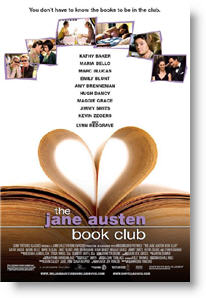
The Jane Austen Book Club
 for mature thematic material, sexual content, brief strong language and some drug use.
Reviewed by: Nory Garcia
CONTRIBUTOR
| Moral Rating: | Average |
| Moviemaking Quality: |
|
| Primary Audience: | Adults |
| Genre: | Romance Drama |
| Length: | 1 hr. 46 min. |
| Year of Release: | 2007 |
| USA Release: |
September 21, 2007 |


What does the Bible say about adultery? Answer
How can I deal with temptations? Answer
Should I save sex for marriage? Answer
What are the consequences of sexual immorality? Answer
TRUE LOVE—What is true love and how do you know when you have found it? Answer
For a follower of Christ, what is LOVE—a feeling, an emotion, or an action? Answer

What’s wrong with being gay? Answer
Homosexual behavior versus the Bible: Are people born gay? Does homosexuality harm anyone? Is it anyone’s business? Are homosexual and heterosexual relationships equally valid?
What about gays needs to change? Answer
It may not be what you think.
Read stories about those who have struggled with homosexuality



| Featuring |
|---|
| Maria Bello, Emily Blunt, Kathy Baker, Amy Brenneman, Maggie Grace, Jimmy Smits, Ed Brigadier, Kevin Zegers, Marc Blucas, Catherine Schreiber, Ned Hosford, Hugh Dancy, Messy Stench, Chris Burket, Parisa Fitz-Henley, Lynn Redgrave, Stephanie Denise Griffin, Myndy Crist, Graham Norris, Kurt Bryant, Russ Jones, Michelle Ewin, Gwendoline Yeo, Nancy Travis, Miguel Nájera |
| Director |
|
Robin Swicord |
| Producer |
| John Calley, Julie Lynn, Jonathan McCoy, Lisa Medwid, Diana Napper, Kelly Thomas |
| Distributor |

“You don’t have to know the books to be in the club.”
Director’s Synopsis: Robin Swicord’s adaptation of the novel The Jane Austen Book Club concerns a group of women and a man who meet regularly to duscuss the works of the popular author, but soon discover their lives are playing out much like one of the author’s fictional worlds.
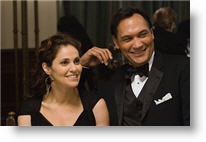
This film reads like the who’s who of Emmy Awards of prime time television, from Kathy Baker of the old series “Picket Fences”, and “Cold Mountain,” and Amy Brenneman of “Judging Amy,” to Jimmy Smits of “NYPD Blues”, and the new comers Maggie Grace (“The Fog”) and the always excellent Emily Blunt of “The Devil Wears Prada” fame, not to mention the one actress Hollywood owes an Oscar® to, Maria Bello who is the queen of indie films like “The Cooler” and “A History of Violence,” with small appearances by Lynn Redgrave’s, and Nancy Travis—it is completely and effortlessly done as far as the acting goes. The characters are soft and not too intense, except for Emily Blunt’s character Prudie who is so tightly wound she looks as if she’ll decompose any minute.
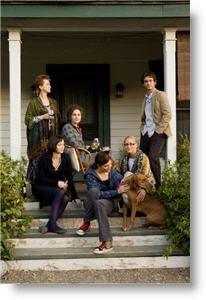
The center of the story is made up of the friendship between the women and the one man in the book club; they all get together and discuss the novels and pretty soon you realize they aren’t talking about the characters in the books but about their own lives, with quips thrown at themselves and each other without offending one another. They are full of love and acceptance, with no judgment of each other, their behavior and their choices in life styles. One character a young woman named Allegra, played by Maggie Grace, is a lesbian, and she goes from the end of one relationship to another before the movie is even half over. The mention of her being a lesbian is done in such a way as to not even notice it, as if they were talking about a normal one, between a man and a woman, and no one says any thing negative about it.
GAY—What’s wrong with being Gay? Answer —Homosexual behavior versus the Bible: Are people born Gay? Does homosexuality harm anyone? Is it anyone’s business? Are homosexual and heterosexual relationships equally valid?
What about Gays needs to change? Answer —It may not be what you think.
The same can be said about the fact that one character’s husband leaves her for another woman he’s been sleeping with for six months, after he informs his wife over dinner that he’s divorcing her. One character has been married six times, another wants to sleep with her student, yet another’s husband has had an affair, while her daughter is in a lesbian relationship in which she is also unhappy. The world has always offered the “don’t judge any one” advice, “we are to love every one and judge no one, if it feels good do it, it must be right if it makes you happy.”
However, God has so much more to offer us than empty relationships; He is very clear in His word in 1 Corinthians 7:2. Nevertheless, because of sexual immorality let each man have his own wife, and let each woman have her own husband. Then in Mathew 5:27-28 he states “You have heard that it was said to those of old you shall not commit adultery but I say to you that who ever looks at a woman to lust after her has already committed adultery with her in his heart.”
Loneliness is found at every turn when Christ is not at the center of our lives, for as long as we are in His will, every thing will fall in its place, our marriages, our relationships.

While this film is well acted and is a good study in the perils of dating and divorce, mothers and daughters, and relationships, in general, I would not recommend it, especially to younger viewers, though it has a PG-13-rating.
See list of Relevant Issues—questions-and-answers.

Offensive / 4
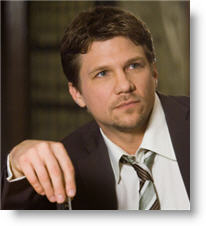
The highlight of this romantic comedy, for me, as a guy, is Maria Bello and the token dude in the story, a geeky fellow by the name of Grigg. The audience is first introduced to him as the beautiful blonde wanders into a conference looking to meet up with a friend. The friend never shows, and the eager sci-fi enthusiast is quick to dote on Bello, but not without first nervously blundering, picking up a lighted votive instead of his drink, conversing awkwardly with much infatutuos trepidation. Bello’s character invites him to join the book club, hoping to set him up opposite a recently broken heart. Scarce does she accept Grigg’s readiness to participate in a social gathering of learned women, all for the sake of getting close to her. Down the road, he leans for a kiss while wearing his bicycle helmet and bonks her on the head. He invites her to go shopping for a couch but tarries not at the furniture store, and instead he takes her out for lunch. Slick, slightly circuitous, but a smooth way to secure a lunch date. Grigg’s the regular guy who quakes in his boots, stammers in his speech, and falls head over heals for a pretty lady—his heart beats outside his chest as palpably as Bugs Bunny’s or Pepe Le Pew’s would. But still he presses on for the duration of the movie to win the heart of this woman over. As Dean Martin would say, “That’s Amore…”
This is a very-multifaceted movie, with most of its characters’ lives falling straight outta the pages of Austen’s books. Every step, every relationship—all parallel the literature. I know naught of Jane’s anthology, so I’m certain a fair share of (otherwise) familiar material went by unnoticed. The glory of this flicker show is however no a priori knowledge of said works is required. Rather, it’s very accessible, totally engrossing and altogether relatable in its entirely human depiction of events and circumstances.
Moral rating: Average / Moviemaking quality: 4
My Ratings: Very Offensive / 3½