First Knight
 for some brutal medieval battles.
Reviewed by: C. I. Bishop
CONTRIBUTOR
| Moral Rating: | Better Than Average |
| Moviemaking Quality: |
|
| Primary Audience: | Adults Young-Adults Mature-Teens |
| Genre: | Action Adventure Romance Drama |
| Length: | 2 hr. 14 min. |
| Year of Release: | 1995 |
| USA Release: |
July 7, 1995 DVD: October 7, 1997 |

Arthurian legends
Heroism, courage, bravery
Self-sacrifice
TRUE LOVE—What is true love and how do you know when you have found it? Answer
What is LOVE, for a follower of Christ? Answer
Good versus evil
Learn about SPIRITUAL DARKNESS versus spiritual LIGHT
About the fall of mankind to worldwide depravity
What is SIN AND WICKEDNESS? Answer
Hatred and revenge
About murder
About death
War in the Bible
Armies in the Bible
Swords, javelins and knives in the Bible
Archers in the Bible
Royalty
About marriage in the Bible
Love triangles
| Featuring |
|---|
|
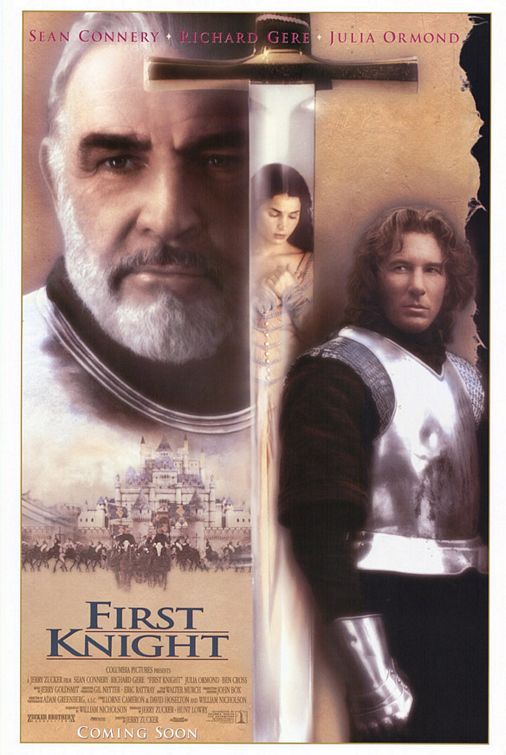
Sean Connery … King Arthur Richard Gere … Lancelot Julia Ormond … Guinevere Ben Cross … Prince Malagant Liam Cunningham … Agravaine Christopher Villiers … Sir Kay Valentine Pelka … Sir Patrise Colin McCormack … Sir Mador Ralph Ineson … Ralf John Gielgud … Oswald See all » |
| Director |
|
Jerry Zucker |
| Producer |
| Hunt Lowry, Jerry Zucker, Janet Zucker, Kathryn J. McDermott, Gil Netter, Eric Rattray, First Knight Productions, Columbia Pictures |
| Distributor |
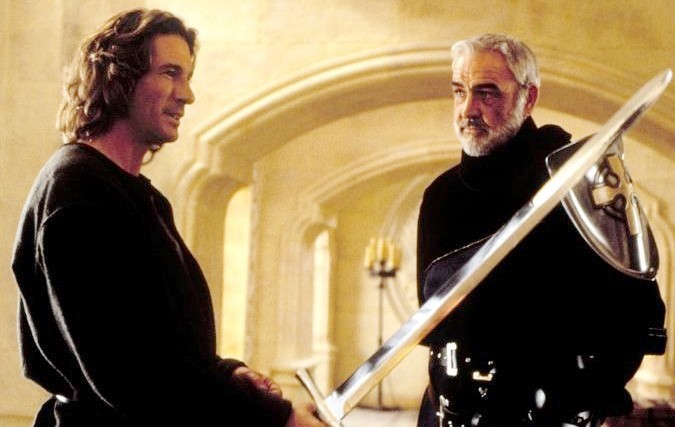
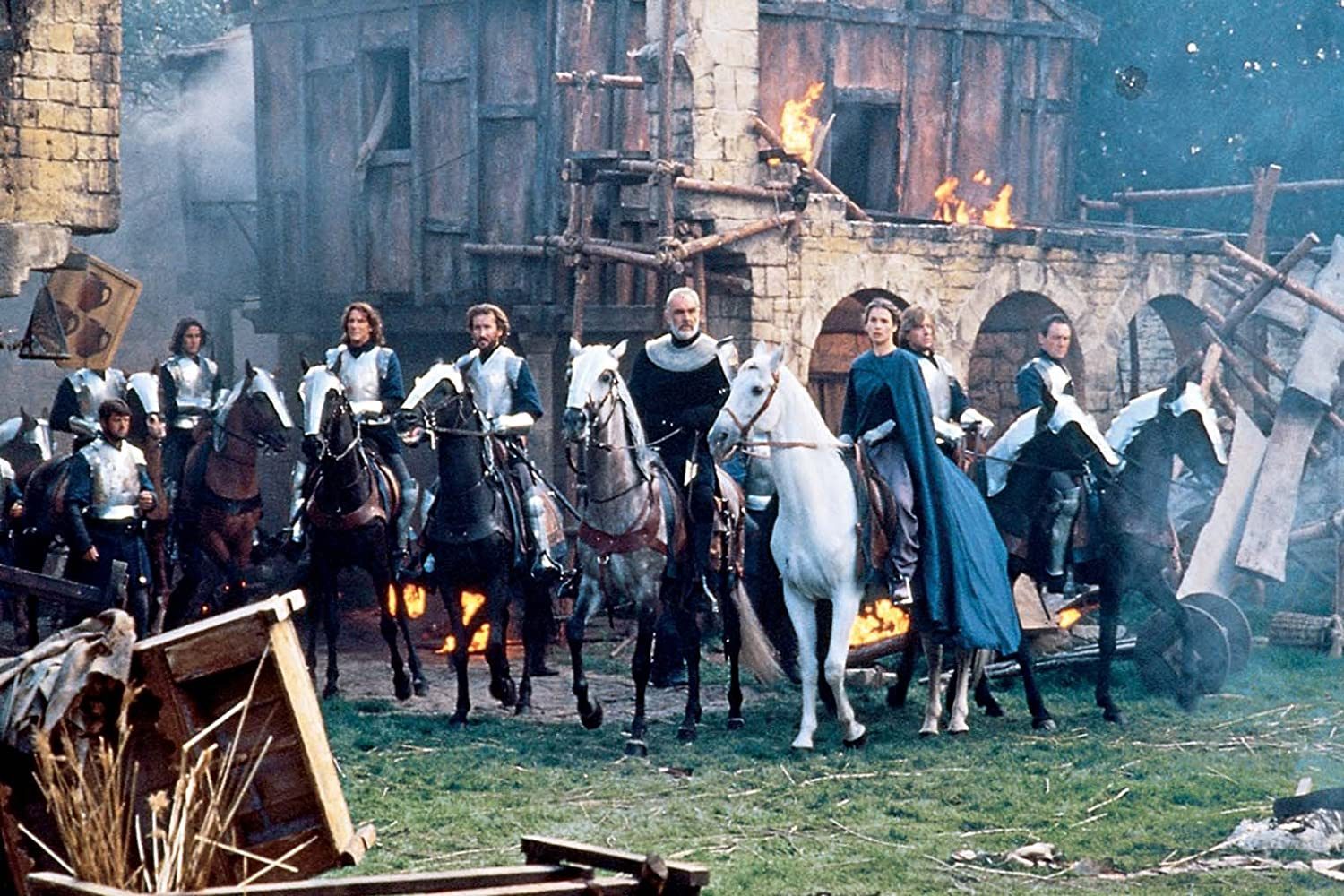
It is a time of tribulation and warfare in England, when one must live by the sword or die by it. Prince Malagant, Arthur’s First Knight, has betrayed him and left to follow his own destiny of power and greed. His lands border the estate of Leanesse, governed by the beautiful and compassionate Lady Guinevere… but his true quarry is Camelot. Burning, pillaging, murdering at will, Malagant inflicts terror upon the peasantry who turn to their lady for help. Torn between her freedom and a love for her people, she decides that the best manner in which to protect her tenants is an alliance between Leanesse and Camelot, whose legendary King Arthur would die to protect the innocent.
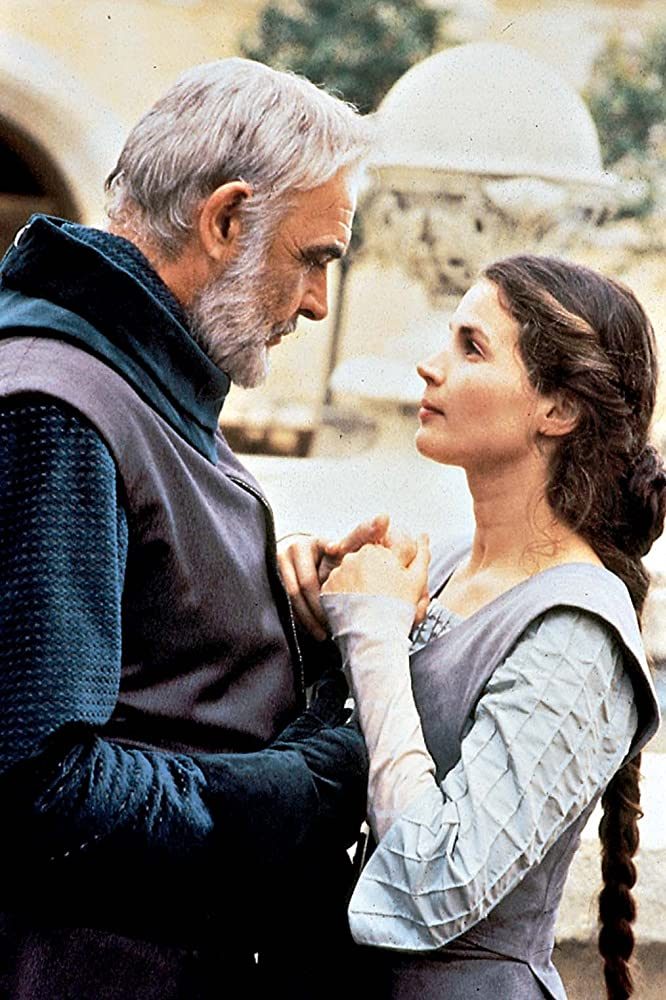
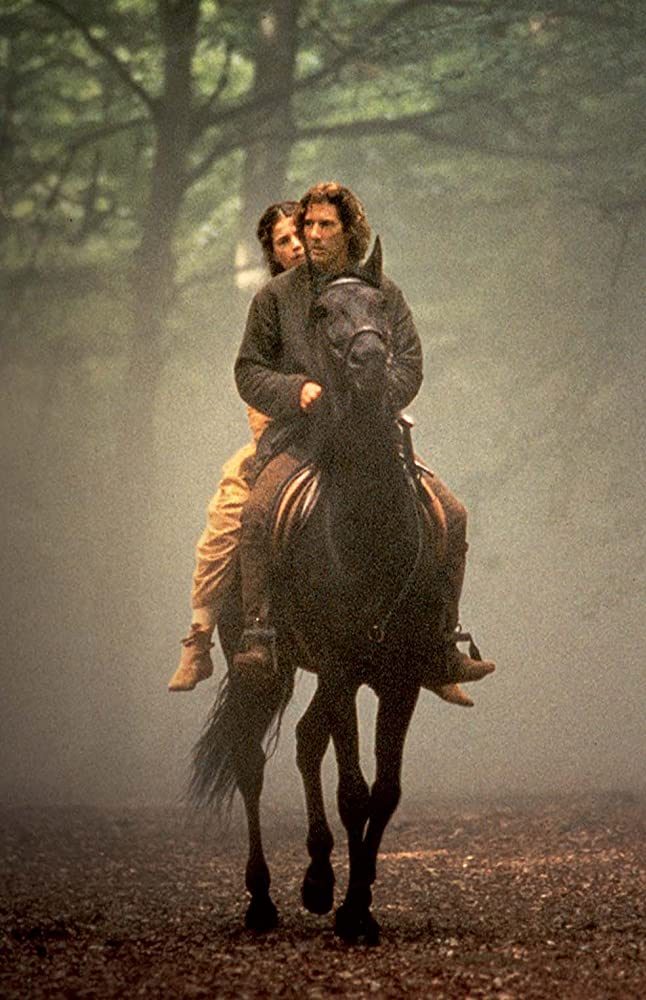
While on her journey to the famed city of the most powerful man on Earth, Guinevere’s caravan is attacked by Malagant’s men and her carriage taken prisoner. In a daring escape, Guinevere flees into the wood and is rescued by the wandering swordsman Lancelot. A magnificent and fearless fighter but also a notorious womanizer, he attempts to seduce her but she refuses his advances and goes into the welcoming arms of King Arthur, expecting never to see Lancelot again.
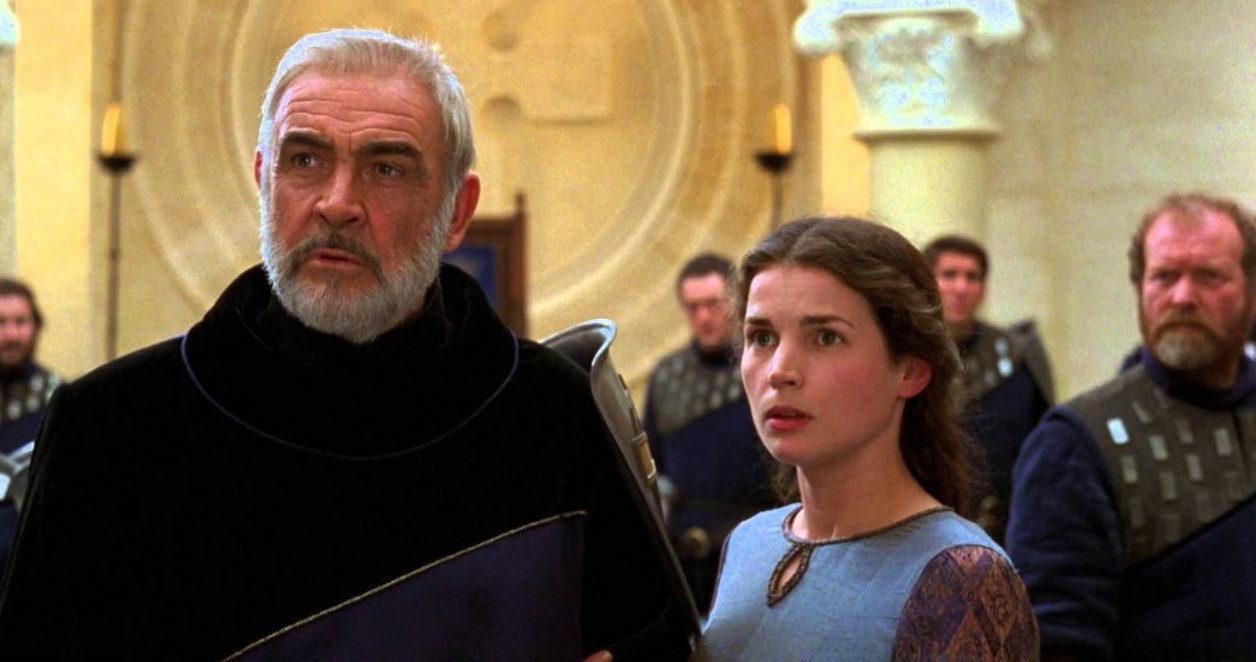
However, an ill wind blows no good and Lancelot arrives in Camelot the day of her public engagement. Braving the gauntlet to win a kiss from the would-be-queen, Lancelot is praised by Arthur for his bravery (and stupidity) and eventually invited to join the Knights of the Round Table in Malagant’s place. Their arch-enemy, in the meantime, is determined to have Leanesse and will stop at nothing to gain it. And when a challenge on the castle itself leaves Guinevere in enemy hands, Arthur may give up everything to purchase her freedom.
I stayed away from this film when it premiered because a film about the fated love affair that sent Camelot into ruin was bound to be raunchy and tied with strings of adultery. When I did hesitantly give the film a chance, I was immediately impressed with the restraint showed by the producers and scriptwriters. The love affair was merely a sideline to a wonderful story of bravery, honor, and self-sacrifice. And what’s more, Guinevere was faithful to Arthur save in one instance upon Lancelot’s departure, when she gave him a farewell kiss. King Arthur himself was a very pronounced and blatant Christian, asking for God’s mercy and wisdom in dealing with Malagant, his knights, and even Guinevere. “I take the good with the bad,” he says to Lancelot early on. “I can’t love people in slices.” Yet he doesn’t hesitate to punish sin where it’s due. Christianity is cast in a respectable light; there is no Merlin, magic, or witchcraft here.
Not a single profanity is uttered in the entire two hours. There is not a hint of nudity or sexuality other than some mild innuendo. Lancelot befuddles Guinevere’s captor by insinuating that he was only after the woman (a vague suggestion of rape). Malagant terrifies Guinevere by tearing off her dress, but she is still suitably (and modestly) covered with a thick petticoat and chemise.
The only caution in the film’s rating is the violence. Sometimes explicit, often brutal, the warfare element of the story is First Knight’s only flaw. Hand-to-hand combat, impaling by both arrows and swords, the burning of a church and barn and intense thematic elements make this unsuitable for impressionable children.
FILM VIOLENCE—How does viewing violence in movies affect families? Answer
Gorgeous scenery, compelling dialog, magnificent costumes and the sheer magnitude of the Camelot that lives on in myth draws together a film that, despite its very few flaws, will touch your heart. The most moral and compelling Camelot story of all time, “First Knight” is a film that teaches good ideals and the value of honor without the usual Hollywood morals. An afternoon well-spent for lovers of the Arthurian legend.
See list of Relevant Issues—questions-and-answers.

[Better than Average / 4]
People like to say that the Arthur legends are pre-Christian in nature, and there are some pagan elements, but the legends as we know them today basically came down to us from the 12th century, with various additions and adaptations in the following 3 centuries. They were very much a product of the High Medieval period, and as such, were thoroughly saturated in a Christian worldview and belief system.
“First Knight” honours this. That is its real strength. I admit there’s no Merlin, there’s no magic and some of the more outlandish appendages to he Arthurian legends (although if you read the earliest versions, Merlin is actually dead before Arthur comes on the scene), and apart from the Lancelot/Guinevere dynamic it doesn’t seem to stick so close to the stories as we know them.
I would argue, though that “First Knight” was the last Arthurian story that was faithful to the spirit of its Medieval forbears. There are a noble quest (unrealistic but so are some scenes in the Medieval Romances) and Malagant, a largely forgotten villain from some of the legends, does provide a worthy opponent.
Above all though, “First Knight” gets the idea of Arthur as the model of Christian Kingship whose ideals failed him in a less than ideal world. It doesn’t make out Christians to be fools or buffoons, or evil corrupt, cruel and backstabbing like many more recent versions. Rather they are flawed human beings seeking to build a kingdom and society based on truth, loyalty and justice.
Now I’ll admit that its not ideal. Several aspects of the movie grated on me, most notably the American accents (and apparently one Australian accent), as well as Arthur being played by a Scotsman (though Sean Connery was in nearly everything then), as well as the hammy battle scenes, outlandish science fiction like costumes, and some silly additions like miniature hand held crossbows (what the actual… ?), but overall “First Knight” is a movie I keep returning to.
I think King Arthur—if indeed he existed—would approve.
Moral rating: Good / Moviemaking quality: 3½
[Better than Average / 5]
PLEASE share your observations and insights to be posted here.
My Ratings: [Better than Average / 4]