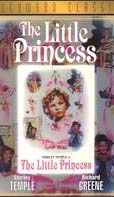
The Little Princess

Reviewed by: Brett Willis
CONTRIBUTOR
| Moral Rating: | Good |
| Moviemaking Quality: |
|
| Primary Audience: | Family |
| Genre: | Drama |
| Length: | 1 hr. 31 min. |
| Year of Release: | 1939 |
| USA Release: |
| Featuring |
|---|
| Shirley Temple, Richard Greene, Anita Louise, Ian Hunter, Cesar Romero, Arthur Treacher, Mary Nash, Sybil Jason, Miles Mander, Marcia Mae Jones, Beryl Mercer |
| Director |
|
Walter Lang |
| Producer |
| Darryl F. Zanuck, Gene Markey |
| Distributor |

There are several potshots at class snobbishness and a lot of tear-jerking in this Shirley Temple formula film, but still room for a few song and dance numbers (including some in a dream sequence).
Temple repeaters Mary Nash and Arthur Treacher play the bad lady and the comic relief, respectively (no surprise there). There are also good performances by Richard Greene (later the star of the 1950s “Robin Hood” TV series) and young Cesar Romero. Most of Temple’s early films were B&W and were computer colorized by Fox in 1993, but this one was shot in Technicolor originally.
Young, motherless Sara (Temple) is left at an exclusive British girls’ school by her father, Capt. Crewe (Ian Hunter) when his regiment is posted to the Transvaal during the Boer War (1899). The proprietress, Miss Minchin (Nash), is a stickler for proper behavior and although she feigns loving care for her students, her real concern is money. As long as Sara is rich, Miss Minchin favors her. But when it’s reported that Capt. Crewe is dead and that his wealth (including holdings in South African diamond mines) has been confiscated by the enemy, Sara is demoted to servant status to pay off her debt. Sara keeps a positive attitude and continues to believe that it’s a mistake, that her father is really still alive. Eventually, she receives unexpected help from Queen Victoria.
The plot is predictable but somewhat thought-provoking. There’s nothing objectionable in the film beyond the general meanness of some of the characters. The view of classic British society and wartime mentality raises the question of the extent to which a small child should be forced to be a “good soldier.” But on the whole, it has the same outline as Temple’s other childhood films, showing her character suffering loss of parents and other hardships yet refusing to be changed by her circumstances.

PLEASE share your observations and insights to be posted here.
Spiritual content: Sara prays for God to help the cause of the Boer war which her father is fighting.
Sensual content: A few kisses by an engaged couple. In Sara’s dream, some characters in the king’s court (men included) wear tights. Also, in the dream, some ballet dancers are dressed in their typical costumes.
Violent content: Talk of war injuries, nothing graphic shown.
Language: A man calls himself the “a” word. The character of Becky says “O Lo” a few times which is a shortened misuse of God’s name.
Other negative content: Sara repays the bully girl (the Bible tells us that “”Vengeance is mine, I will repay,” says the Lord” (Romans 12:19).
My Ratings: Moral rating: Good / Moviemaking quality: 5