Croupier

Reviewed by: Carole Stewart McDonnell
CONTRIBUTOR
| Moral Rating: | Very Offensive |
| Moviemaking Quality: |
|
| Primary Audience: | Adults |
| Genre: | Thriller |
| Length: | 1 hr. 31 min. |
| Year of Release: | 1998, Re-release: 2000 |
| USA Release: |
How can I deal with temptations? Answer
Gambling—Should Christians be involved with lotteries or other forms of gambling?
Smoking, gambling, etc—How can I decide whether a particular activity is wrong?
| Featuring |
|---|
| Clive Owen, Kate Hardie, Alex Kingston, Gina McKee |
| Director |
|
Mike Hodges |
| Producer |
| Jonathan Cavendish |
| Distributor |
| The Shooting Gallery |
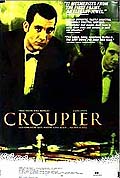
The film “Croupier” by director Mike Hodges, is like a parable. It touches on temptation, isolation, control, the idea of risking, conscience, and double-mindedness. Jack, (played by Clive Owen) is a writer who is uncomfortable with his talent. Writing hasn’t treated him well. He takes a job at a casino—his father set up the interview—as a Croupier. (A croupier is someone who handles the gambling at the gaming tables.) Of course, temptation comes in the form of a South African female gambler who comes to him with an interesting offer. Temptation also comes in the form of his alter ego, Jake, his stand-in character in the novel. Jake represents the cynical disillusioned self. The question, then, is: which part of Jack/Jake will win? The romantic or the cynic.
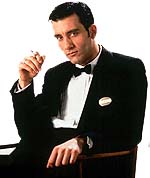
As a Croupier, Jack is not only in control of everything, above the common loser. He fancies that he is also in control of himself. He will not gamble on anything. Because to gamble or risk is to lose. And only fools hope. Jack’s attitude towards the gamblers in life is one of cold superiority. As a writer, he is also in control. It’s as if he is God and all others are there to be analyzed and compared to serve his ego. Jack is seen by all as honest, classy and morally perfect (at least as far as gambling is concerned) but this perfection is mere seeming.
This film is slow at times, but never really boring. It’s a character study in which hopelessness and risk is explored. And we see how someone without hope of God in the world thinks. We see how pitiful and cold the world of gambling is. One particularly jarring scene is the Christmas Eve scene with the casino boss dressed in Santa Claus outfits while he watches the gambling floor. We also see how those who choose a particular high road (by their own definition, of course) view others who fall short. Jack is vey smug about his disbelief in hope. As self-righteous in his own way as any other kind of moral prig.
Christians might like this movie because of the obvious: it shows the pity inherent in gambling. Even the wealthiest and the winningest seem pitiful. But the story reminds me of the parable in the Bible about a man who is going away on a far journey and who gives some money to his servant with which to invest. But, the servant, fearful of losing his boss’s money, doesn’t invest the money. Instead, he hides the money in the ground. When the boss returns, he is quite angry at the lack of investments. The servant had chosen the peace that comes with not risking. There is a great peace that comes with hiding one’s talent and not risking or investing it.
The best line in the film appears early in in the film when Jack tells his girlfriend, Marion, that she is his conscience. Her reply? “Don’t you have your own?” By the end, it would appear that he doesn’t. Or that he has conveniently seared it “for peace’s sake.”

PLEASE share your observations and insights to be posted here.